
How We Work
Every project starts from your product and package. We agree the project conditions in writing, then build and test the machine against them.
Eight Steps From Product to Support
Each step has a clear owner.
Product
Your product, package and output target
Application
The packaging route and the machines that fit
Test
A packaging test where the application is uncertain
Configuration
The machine and line set-up, agreed in writing
Build & Integration
Assembly, electrical commissioning and line integration
FAT
Acceptance against criteria agreed before the test
Delivery & Commissioning
Installation and startup at your site, where included
Support
Remote troubleshooting, spare parts and upgrades
Not every project needs every step. A packaging test is only needed where the application is uncertain, and installation at your site only where the project includes it.
Your Product Comes First
Your product and package decide which machine route is worth evaluating, so we ask about them before we talk about machine models.
What we ask for
Your product and its condition
Target fill weight
Package and package material
Target sustainable good output
Inspection requirements
Downstream steps, such as case packing
We then mark your application as
- Verified on our machines
- Supported for similar products
- Needs a packaging test
- Not currently supported
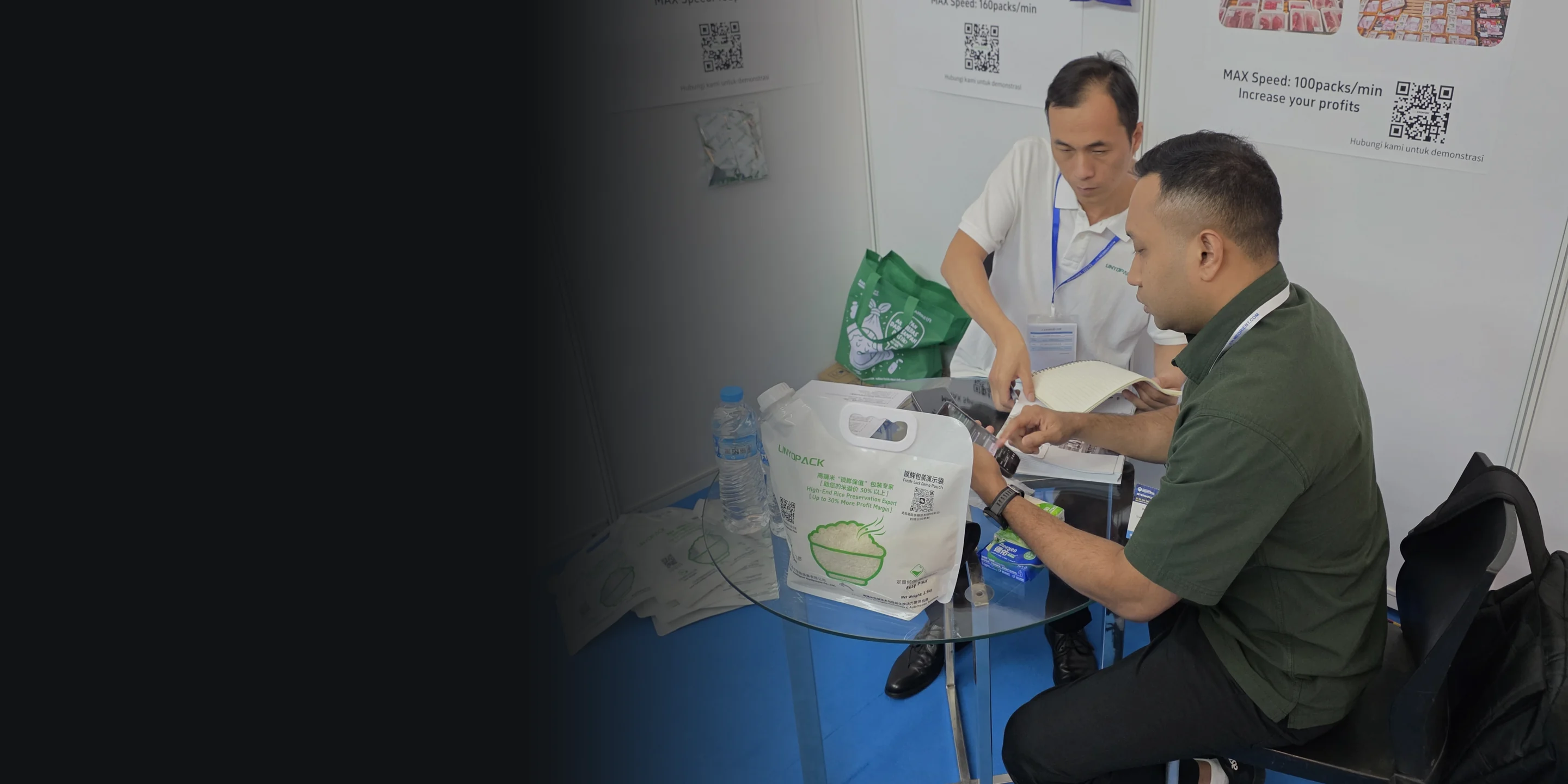
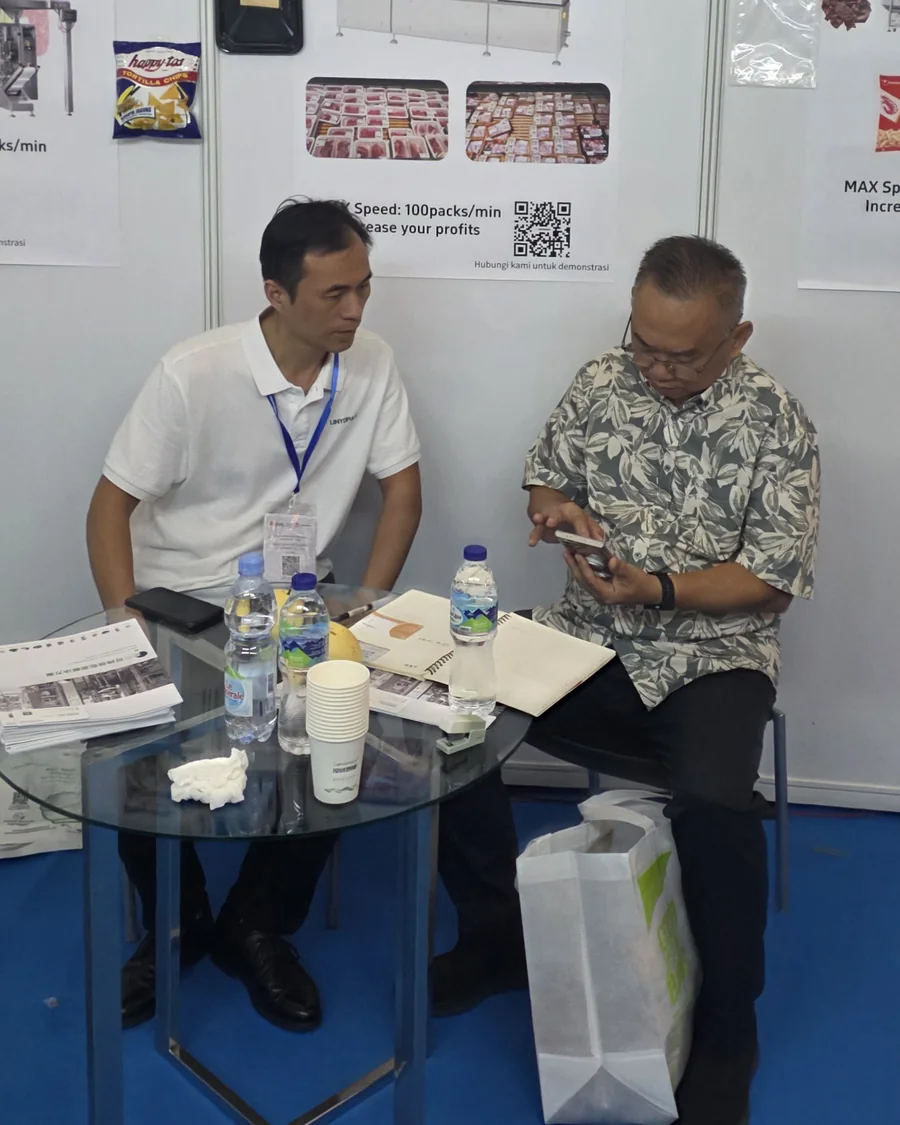
That way your quotation lists what is known and what still needs a test. Photo: talking through a project at our booth.
Test Where the Application Is Uncertain
If the product, film, pouch, tray, seal or output is uncertain, we run a packaging test before the configuration is fixed. It is free; you cover the shipping of your samples, and you get the result within 3–5 working days after they arrive.
The test tells us
Whether the product feeds and doses correctly
Whether the package runs correctly
Whether the seal or closure is acceptable
What sustainable good output is realistic
What needs to change on the machine or the package
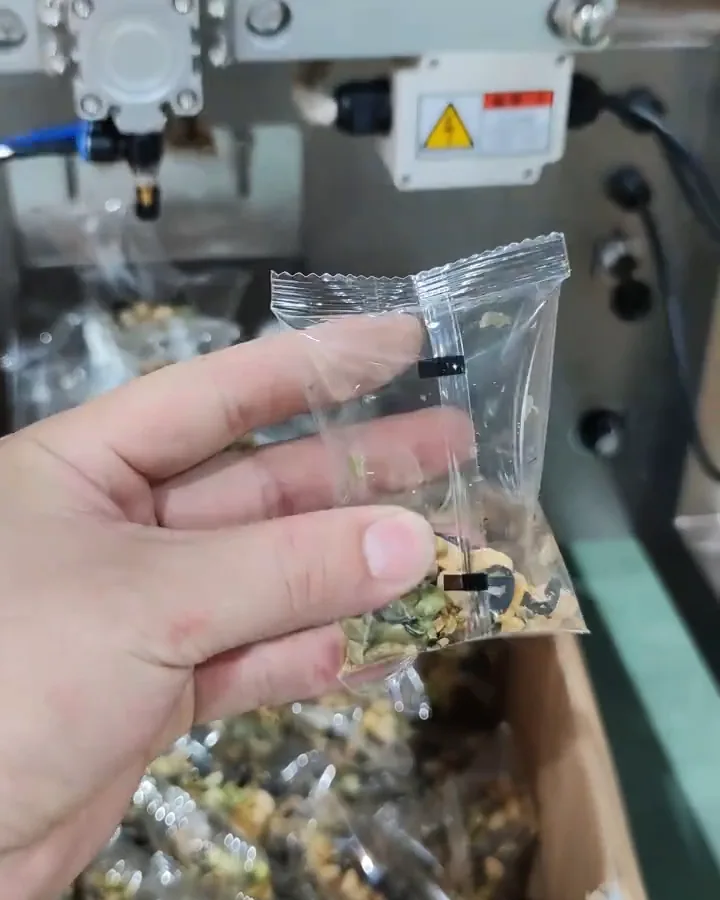
Photo: a sample bag from a VP Series test run in our workshop.
Configuration, Agreed in Writing
Before FAT or any final commitment, the project basis is written down. If your product or package changes after that, we review the effect with you before going on.
For every machine
Product and package
Machine configuration and options
Tooling and forming set
Software version, where relevant
Target good output
Acceptance criteria
For a line, also
The modules in the line
Who is responsible for each module
Mechanical and electrical interfaces
Product, pack, case and pallet flow
The line bottleneck
What FAT covers
Build, Integration and Commissioning
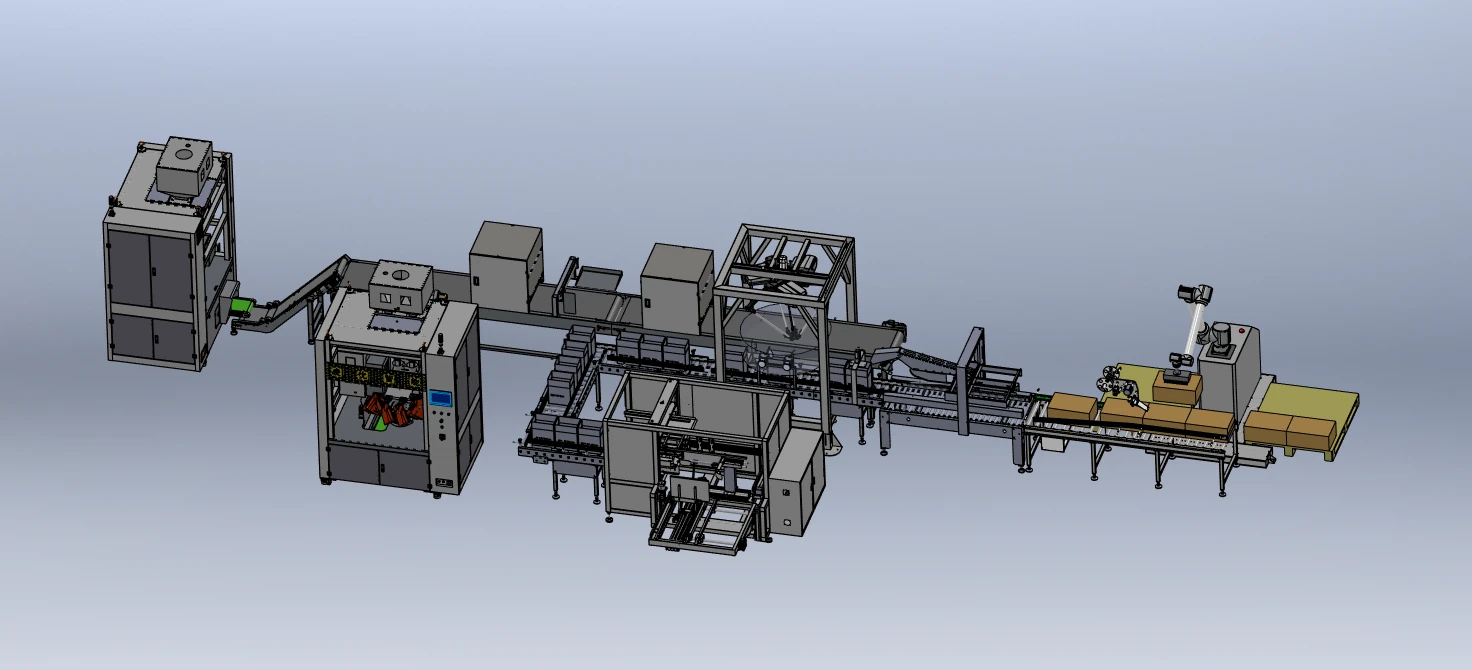
The machine or line moves through four stages before FAT.
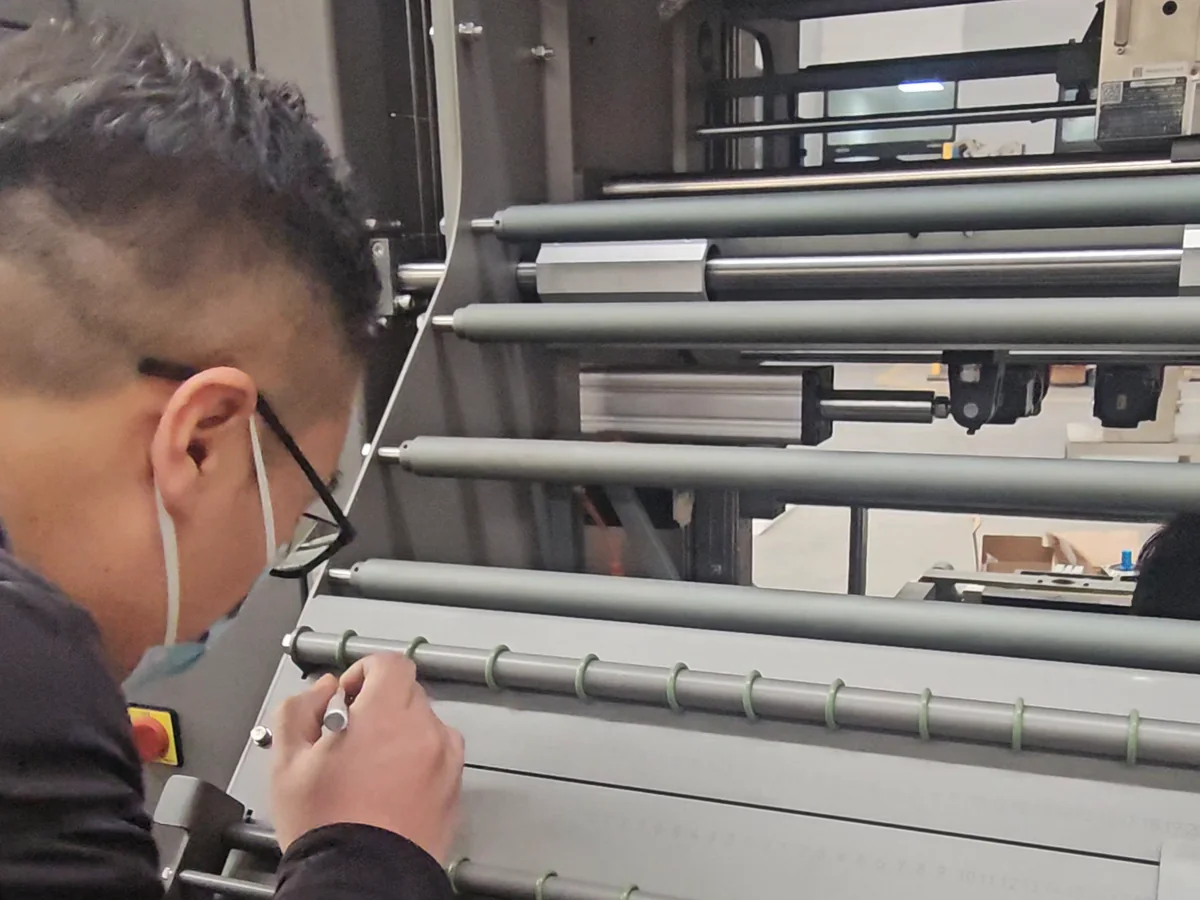
Assembly and Integration
Mechanical assembly of the machine, or of the modules in a line.
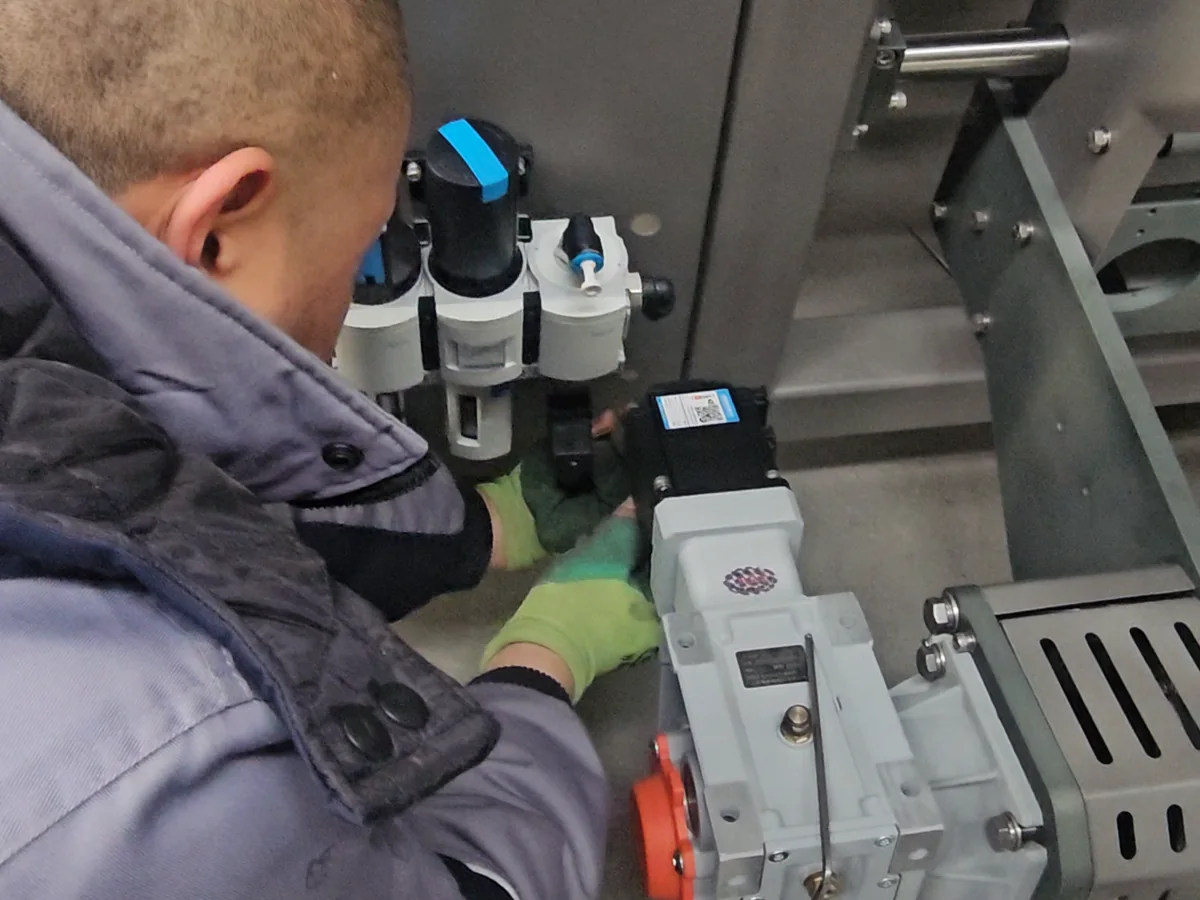
Electrical Commissioning
Wiring and control set-up.
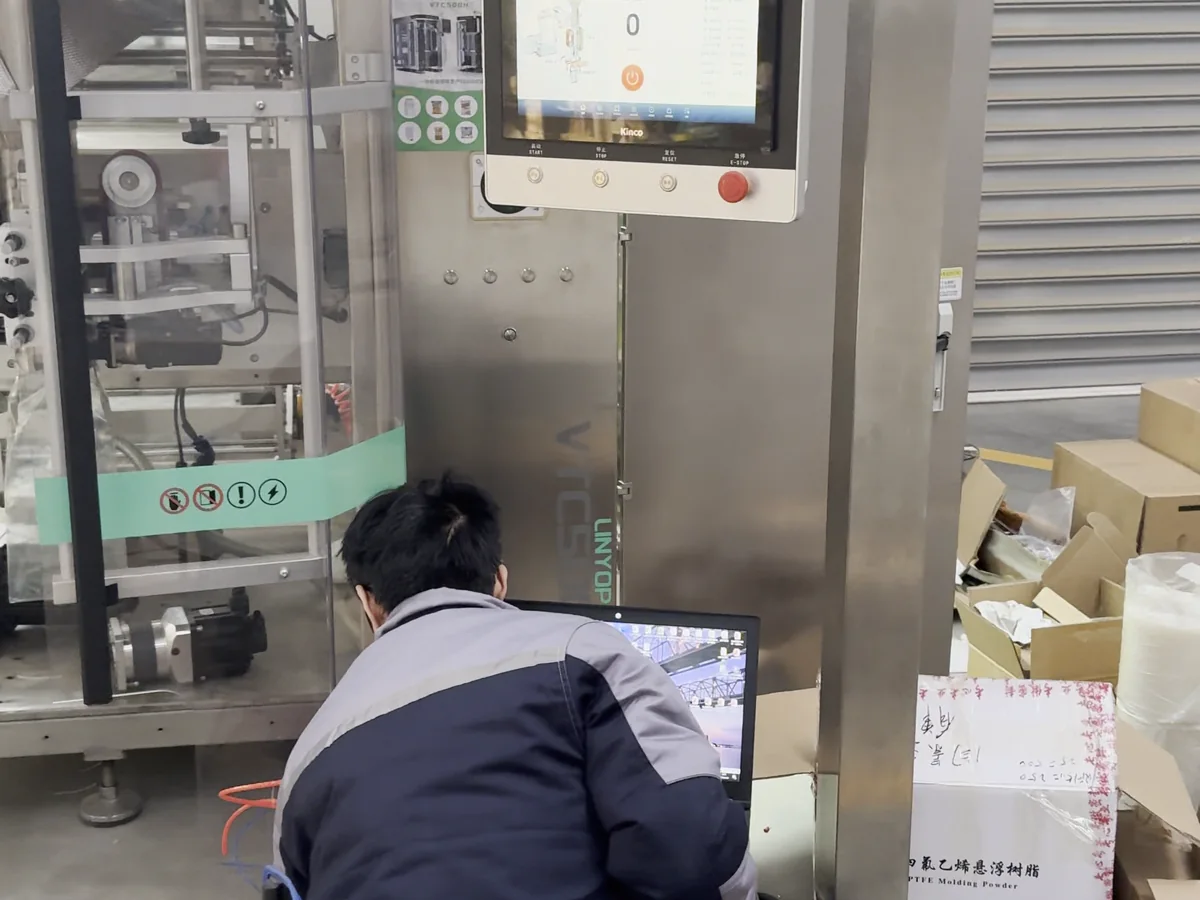
Functional Checks
Each function checked before any product runs.
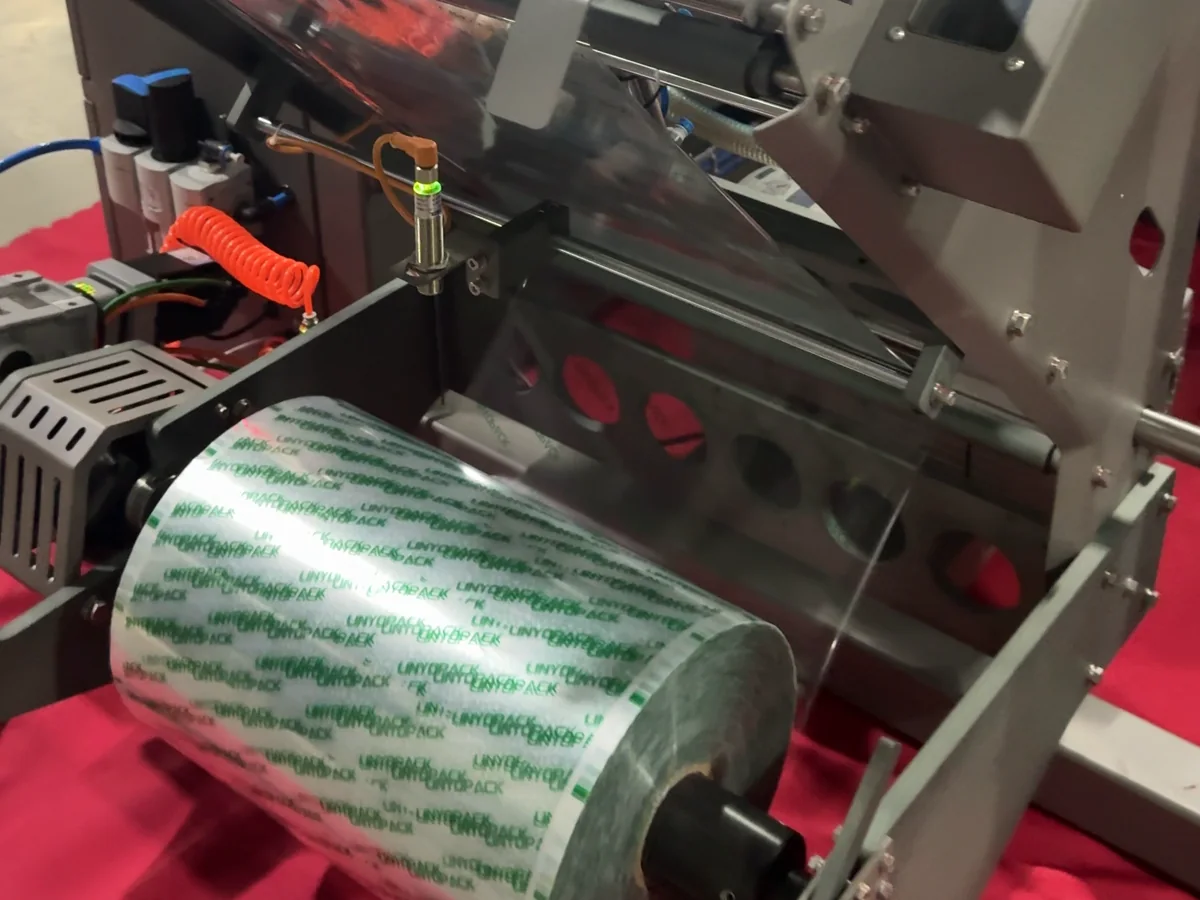
Product and Package Set-up
The machine set up and run with your product, package and tooling.
Photos from our workshop. The build and integration scope depends on the project and on who is responsible for each module.
Factory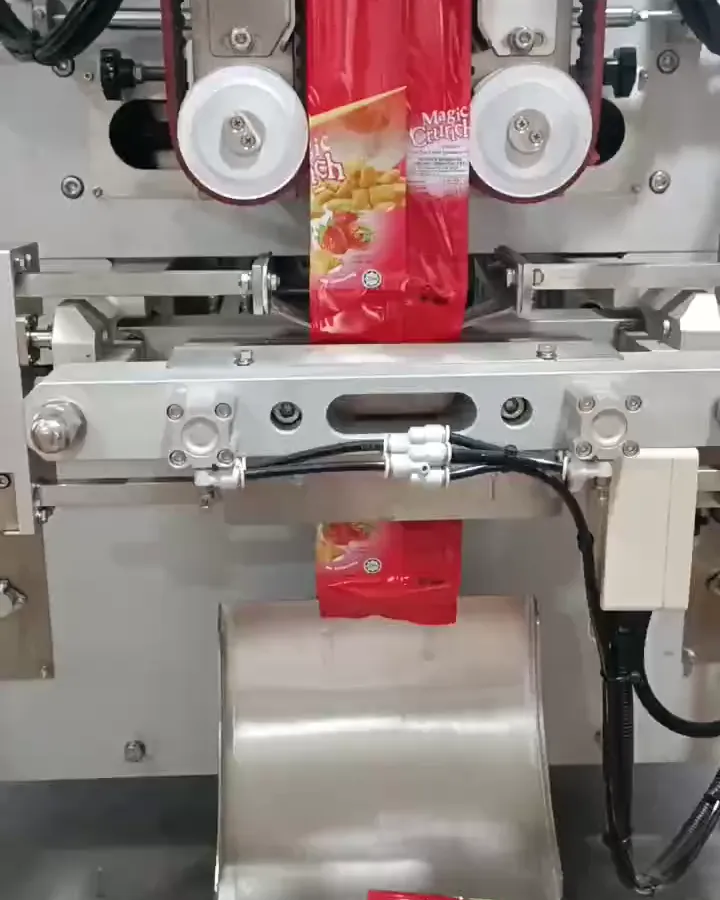
FAT Against Agreed Criteria
The Factory Acceptance Test checks the agreed configuration under the agreed conditions. It counts the packs you can sell, not machine cycles.
Open items are written down and closed within the project scope. Where the project includes it, you can attend at our factory or follow the FAT on a live video call.
Photo: VGT forming quad-seal bags in our workshop.
Delivery, Commissioning and Support
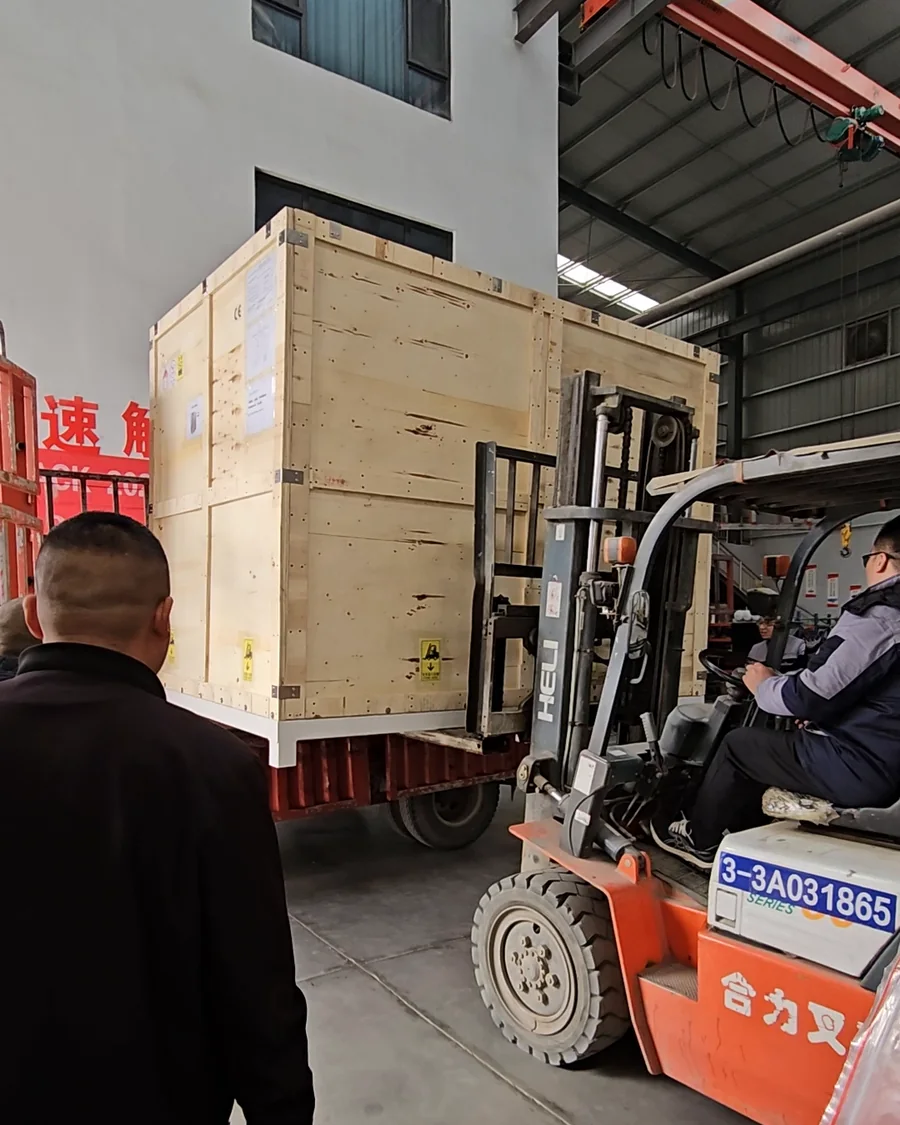
After FAT and release, the machine ships. Installation and commissioning at your site follow where the project includes them.
After delivery
Remote troubleshooting
Spare parts
Upgrade evaluation
Preventive maintenance planning
Warranty: 12 months on the machine, 3 years on core components
A reply within 1 working day
Support follows the machine and the agreed service scope. Photo: a crated machine being loaded for shipping at our factory.
Related Pages
The test, the acceptance and where your machine is built.
Does every project go through all eight steps?
No. A packaging test is only needed where the application is uncertain, and installation at your site only where the project includes it.
What if my product or package changes after the configuration is agreed?
We review the effect on the machine, the tooling and the output target with you before going on.
Who is responsible for each part of a line?
Responsibility for each module and each interface is agreed in writing when the line is configured. FAT then covers the scope agreed for the line.
Can I follow the project without travelling?
Yes. You can join the packaging test and, where the project includes it, the FAT on a live video call. You receive the test video and the written records.
What support do I get after delivery?
Remote troubleshooting, spare parts, upgrade evaluation and preventive maintenance planning, according to the machine and the agreed service scope. The warranty is 12 months on the machine and 3 years on core components.
Start With Your Product
Send your product, package and target output. We will reply with the next engineering step.
- 01Product
- 02Package
- 03Output
- 04Line scope
We reply within 1 working day.
Quick enquiry
We use these details to reply to your enquiry. Read our Privacy Policy.