
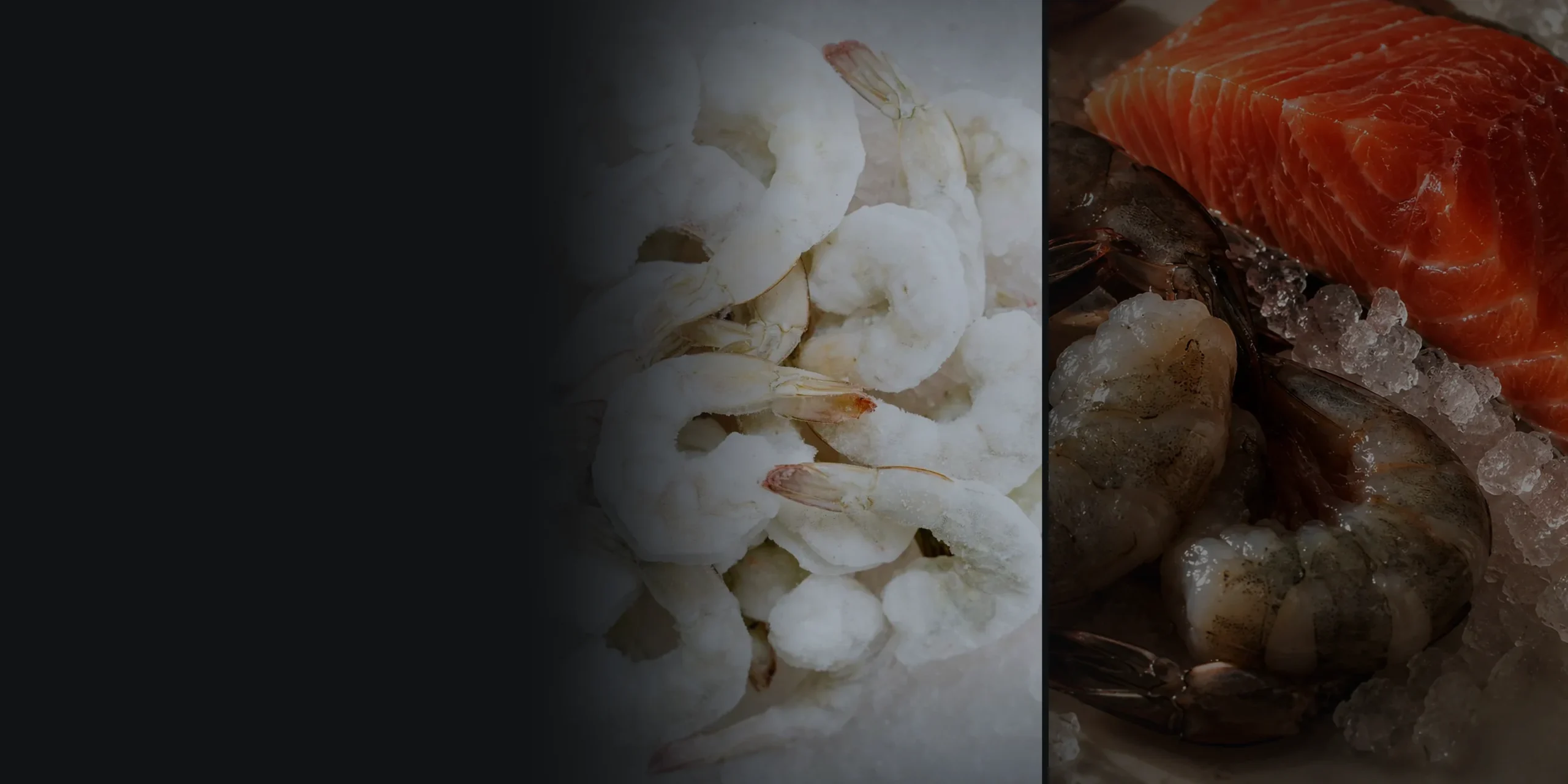
Seafood Packing Machines
Our seafood packing machines follow two routes: frozen fish, fillets and shrimp go into bags, and fresh seafood goes into trays. We set up each route around the product: the SVC260 for frozen bags, the Hybrid Pro T680 for MAP, VSP and sealed trays.
Frozen: weighing → SVC260 bagging → inspection → case packing · Fresh: tray supply → T680 sealing → inspection → case packing
What Are You Packaging?
Fresh and frozen seafood follow different routes.
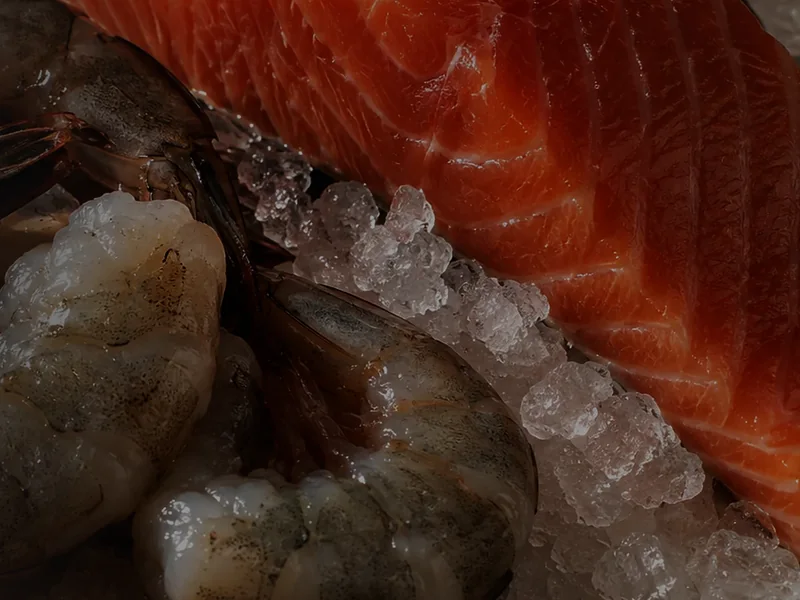
Fresh Seafood
Surface water, shells and sharp edges, and whether VSP suits the product.
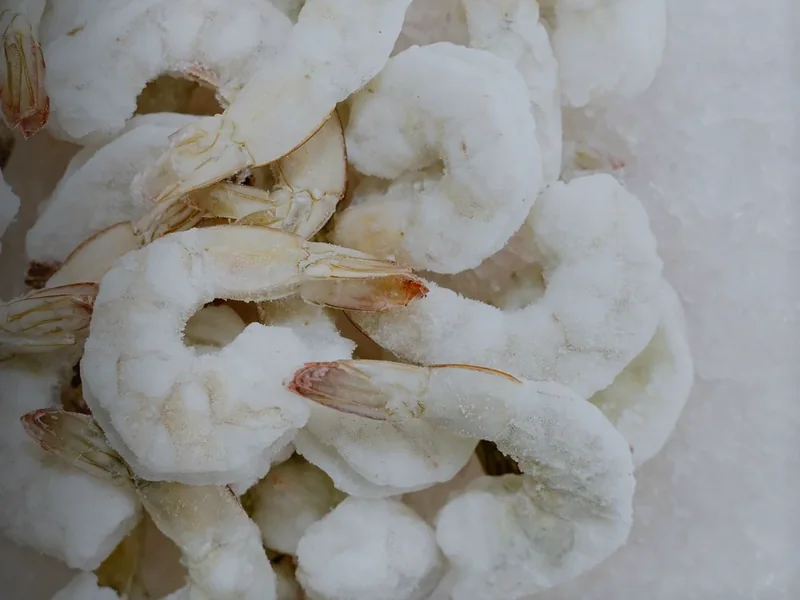
Frozen Shrimp
Weighing glazed, uneven shrimp and keeping ice out of the seal.
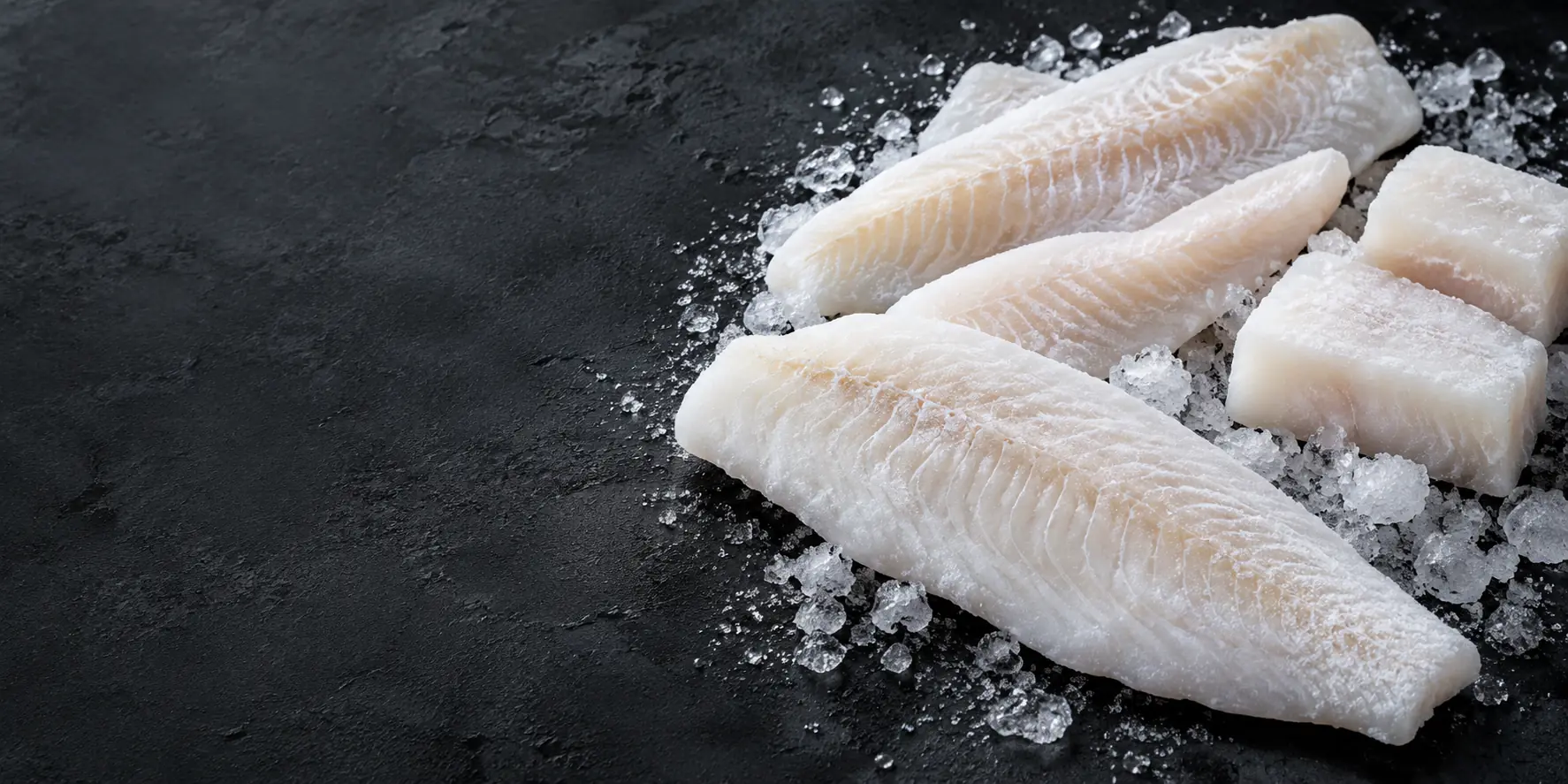
Frozen Fish
Fillets, portions and fish balls: breakage, glaze and long pieces in the bag.
Whole fish, fillets, portions and shell-on products each change the tray, the film and the tooling. Each product is tested before the setup is fixed.
Which Route for Which Seafood
Frozen seafood goes into bags, fresh seafood into trays.
| Seafood | Condition | Package | Machine | Details |
|---|---|---|---|---|
| Fillets and portions | Frozen, IQF or glazed | Pillow bag; side gusset bag as an option | SVC260 | Frozen fish packing line |
| Fish balls and breaded fish | Frozen | Pillow bag; side gusset bag as an option | SVC260 | Frozen fish packaging |
| Shrimp | Frozen, IQF and glazed | Pillow bag; side gusset bag as an option | SVC260 | Frozen shrimp packaging machine |
| Whole fish, fillets, portions and shell-on seafood | Fresh or chilled | Tray: MAP, VSP or seal-only | Hybrid Pro T680 | Fresh seafood MAP packaging |
Each product is tested before the setup is fixed. Whole fresh fish packed in boxes with ice is a different process and is not part of these two routes.
Common Frozen Seafood Packaging Challenges
Four things that decide how a frozen seafood bagging line performs.
Glaze and ice
The ice glaze that protects seafood in cold storage makes pieces stick together on the weigher and sheds ice chips that can end up in the seal.
Uneven pieces, tight weights
A few large shrimp or one long fillet can push a pack over its target weight. Weigher heads and hopper size are matched to the piece size.
Brittle fillets, sharp tails
Frozen fillets snap on long drops, and tails, fins and frozen edges can puncture thin film. Drop heights and film are checked in the test.
Staying frozen
Seafood that waits between steps starts to thaw and stick together. Feeding, weighing and bagging rates are matched so it does not wait.
Details for each product: frozen fish packing line · frozen shrimp packaging
Common Fresh Seafood Packaging Challenges
Four things that decide how a fresh seafood tray line performs.
Surface water and drip
Moisture on the tray and the flange makes the seal less consistent.
Product height
Tall or irregular products change the tray depth, the tooling and whether VSP fits.
Shells, bones and sharp edges
They can puncture the film and affect how the skin fits in VSP.
Finished appearance
MAP and VSP present the product differently. The choice follows the pack you sell.
Frozen Seafood Bag Route
Feeding, weighing and bagging are matched to the seafood and to each other. Machines on this route: SVC260 VFFS, multihead weigher, checkweigher or metal detector, case packer and palletizer.
- 01
Product Feeding
Buffer and transfer to the weigher
- 02
Multihead Weighing
Weigher configured for frozen food
- 03
SVC260 VFFS
Forming, filling and sealing pillow bags
- 04
Inspection
Checkweighing and contaminant checks
- 05
Case Packing
Bags into cases
- 06
Palletizing
Cases onto pallets
Fresh Seafood Tray Route
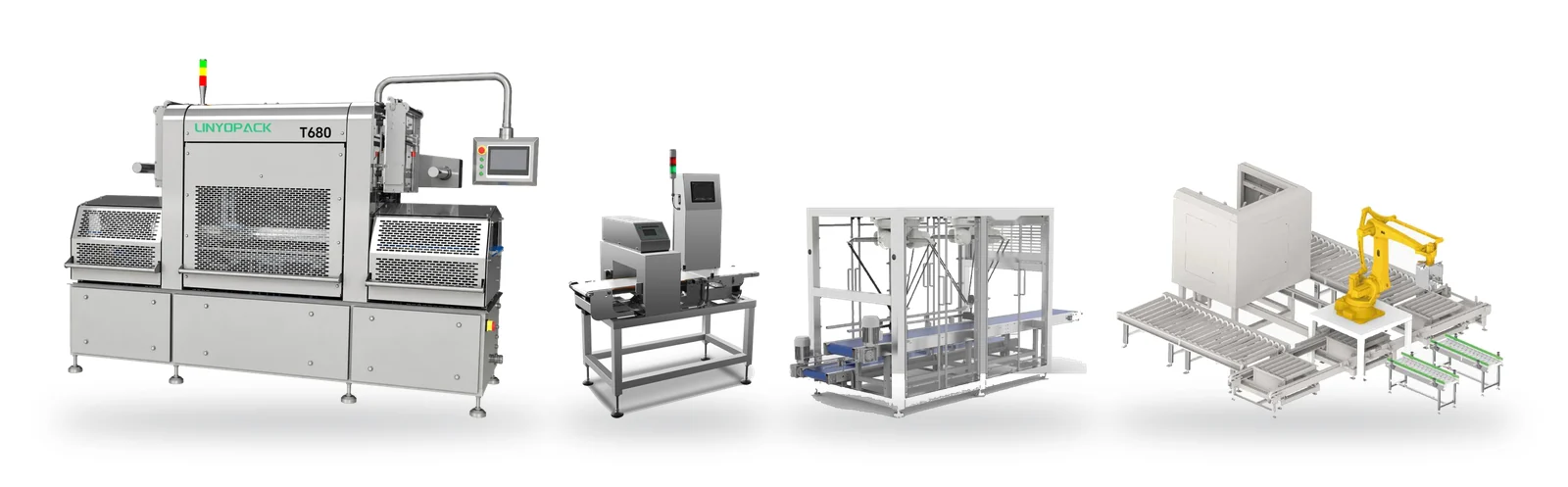
The fresh seafood route: tray supply, loading and sealing are planned together.
- 01
Tray Supply
Empty trays to the line
- 02
Product Loading
Seafood placed in the trays
- 03
T680 Tray Sealing
MAP, VSP or seal-only
- 04
Inspection
Checkweighing and labeling
- 05
Case Packing
Trays into cases
Tray supply, loading, inspection and case packing are integrated around the T680.
Packaging Mode and Machine Fit
Choose the mode first. MAP, VSP and seal-only all run on the T680.
MAP
Vacuum, then gas filling with an O₂ / CO₂ / N₂ mix. Residual O₂ below 0.5%.
Up to 20 cycles/min*VSP
Vacuum skin packaging: the top film is formed closely around the product. Checked for each product.
Up to 12 cycles/min*Seal-Only
Lidding film sealed onto the tray without changing the atmosphere.
Up to 25 cycles/min*
*Machine maximum. Actual output depends on product, tray, film, gas mixture and tooling.
Why the T680
Seafood is one of the T680's listed applications, and one machine covers all three modes on plastic or paper-based trays. Detailed specifications are on the machine page.
View T680Define Sustainable Good Output
A tray line runs at the pace of its slowest stage, often loading or a clean seal, so we check every stage instead of quoting the sealer's top speed.
Trays per cycle depend on your tray and tooling. We set the final line target from product tests and agreed FAT conditions.
Request a Packaging Test- 01
Tray supply
A steady supply of empty trays
- 02
Loading
Enough filled trays per minute, with a clean flange
- 03
Sealing
A stable seal cycle, with vacuum and gas for MAP
- 04
Inspection
Enough accepted, labeled trays per minute
- 05
Case packing
Enough cases per minute at the trays per case you need
Test With Your Seafood
Send a sample or the product details. We run them before the final configuration is fixed. The test is free; you cover the shipping of your samples.
What to send
Product sample or details
Whole, fillet, portion or shell-on
Tray sample or drawing
Top film
Packaging mode: MAP, VSP or seal-only
Required output
Labeling and inspection
What the test checks
Seal quality on the flange
Residual oxygen, for MAP
Skin fit, for VSP
Tray and film pairing
Trays per cycle with your tooling
Sustainable good output
Rejects and stops
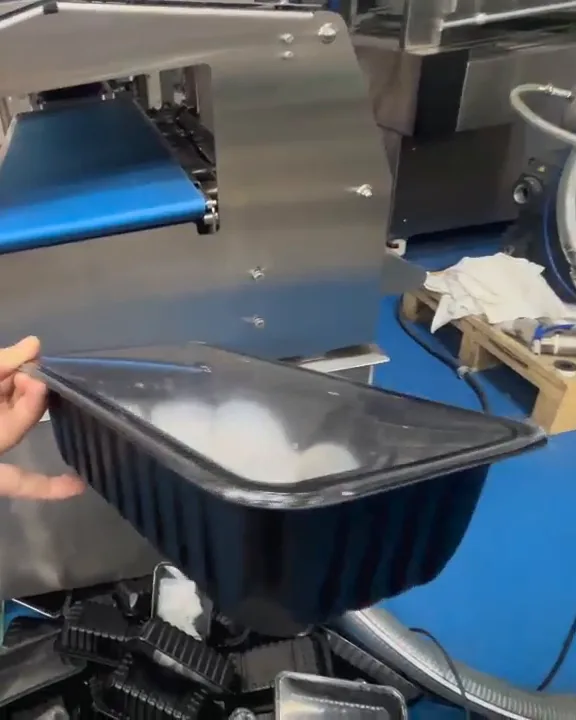
Photo: sealed tray from a T680 test run in our workshop.
Related Pages
The machines, package formats, complete line and services behind this industry.
Which machines are used for seafood?
The SVC260 for frozen fish, fillets and shrimp in bags, and the Hybrid Pro T680 for fresh and chilled seafood in trays.
Is VSP suitable for all seafood?
No. Whether VSP suits your product depends on its shape, shells or edges, the tray and the film. We check it for each product.
How is surface water handled?
We check how drip reaches the flange and the seal during the test, and set the loading and the tray choice around it.
How many trays per minute can the T680 seal?
It depends on the tray size, the tooling and the mode. Standard tooling seals 4 trays per cycle, at up to 20 (MAP), 12 (VSP) or 25 (seal-only) cycles per minute. Your output is confirmed with your tray and tooling.
Is there one gas recipe for seafood?
No. The gas mix is set for your product and tested with your tray and film.
Do you build complete fish packing lines?
Yes. A frozen fish packing line usually runs from feeding and multihead weighing to the SVC260, inspection, case packing and palletizing. Fresh fish in trays runs on the T680 route. Line planning is free: a layout drawing, an equipment list and a capacity calculation.
Can fresh fish be vacuum packed or MAP packed for the US market?
It can, but the cold chain has to be planned with it. The FDA treats fish in reduced oxygen packaging, which includes vacuum packs, VSP and MAP in barrier film, as a risk for Clostridium botulinum type E. The product has to stay below 38°F (3.3°C) from packing to use, with a time-temperature indicator on each pack, or be frozen right after packing. Whole fish that has not been gutted should not be packed this way. Check the current FDA Fish and Fishery Products Hazards and Controls Guidance for your product.
Start With Your Product
Send the product, tray, film, packaging mode and required output. We use them to define the setup and the test plan.
- 01Product
- 02Tray
- 03Film
- 04Output
We reply within 1 working day.
Quick enquiry
You're enquiring about
Seafood Packaging
Industry packaging enquiry
We'll include this industry in your enquiry automatically.
We use these details to reply to your enquiry. Read our Privacy Policy.