
01
Dust and fines
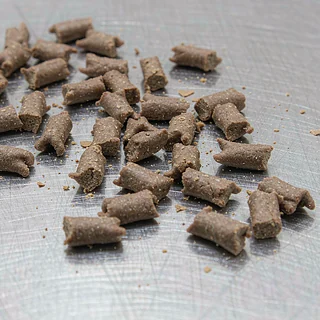
Kibble sheds dust and fines when it is conveyed and dropped. They build up in buckets and hoppers and can reach the seal area.
What we do · Fines are checked on the conveyor, the weigher and the packaging machine with your product.
Choose the package first, then match product handling, weighing and output to your pet food. Our SVC260, VP and VGT baggers, Wide-Spout pouch fillers and both pendulum bucket conveyors are used for pet food.
Packages: pillow and gusset bags, quad-seal bags or 1–5 kg spouted pouches
Six points that decide whether a pet food line runs well.
Kibble sheds dust and fines when it is conveyed and dropped. They build up in buckets and hoppers and can reach the seal area.
What we do · Fines are checked on the conveyor, the weigher and the packaging machine with your product.
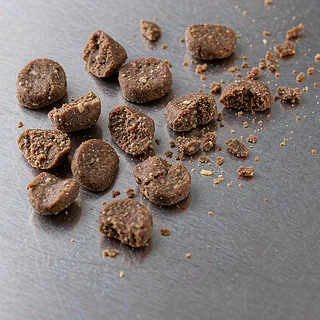
Long drops and hard transfers break kibble. That adds fines and spoils the look of the pack.
What we do · Drop heights and transfer points are set for your kibble and confirmed in the test.
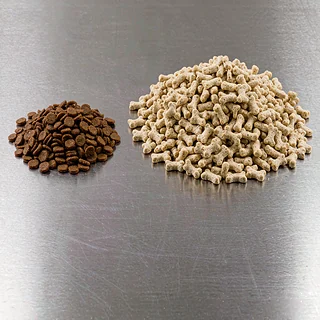
Recipes differ in bulk density, so the same volume carries a different weight. A conveyor rated in m³/h has to be checked in kg/h.
What we do · We convert the conveyor capacity to kg/h with your actual bulk density.
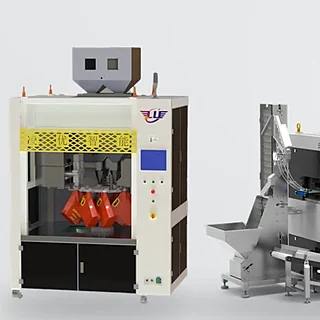
Pet food goes into small bags and into pouches of up to 5 kg. The dosing method and the filling time change with the weight.
What we do · The weighing method and the packaging machine are chosen for your target weight and package.
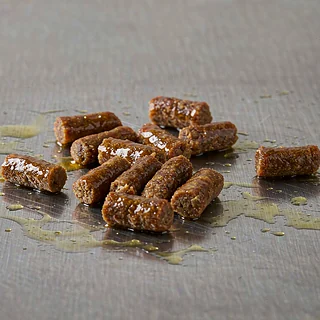
Coated kibble can leave residue on contact surfaces and hold up in hoppers.
What we do · Contact surfaces and cleaning access are reviewed for your product.
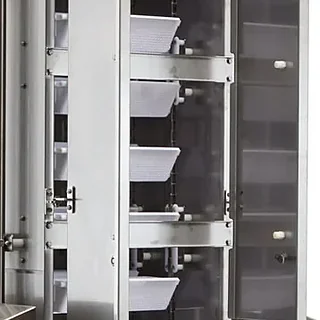
Product left in buckets, hoppers or chutes mixes into the next recipe at changeover.
What we do · Cleaning and changeover access are planned with the conveyor and weigher layout.
The same handling and weighing feed whichever packaging machine your package needs.
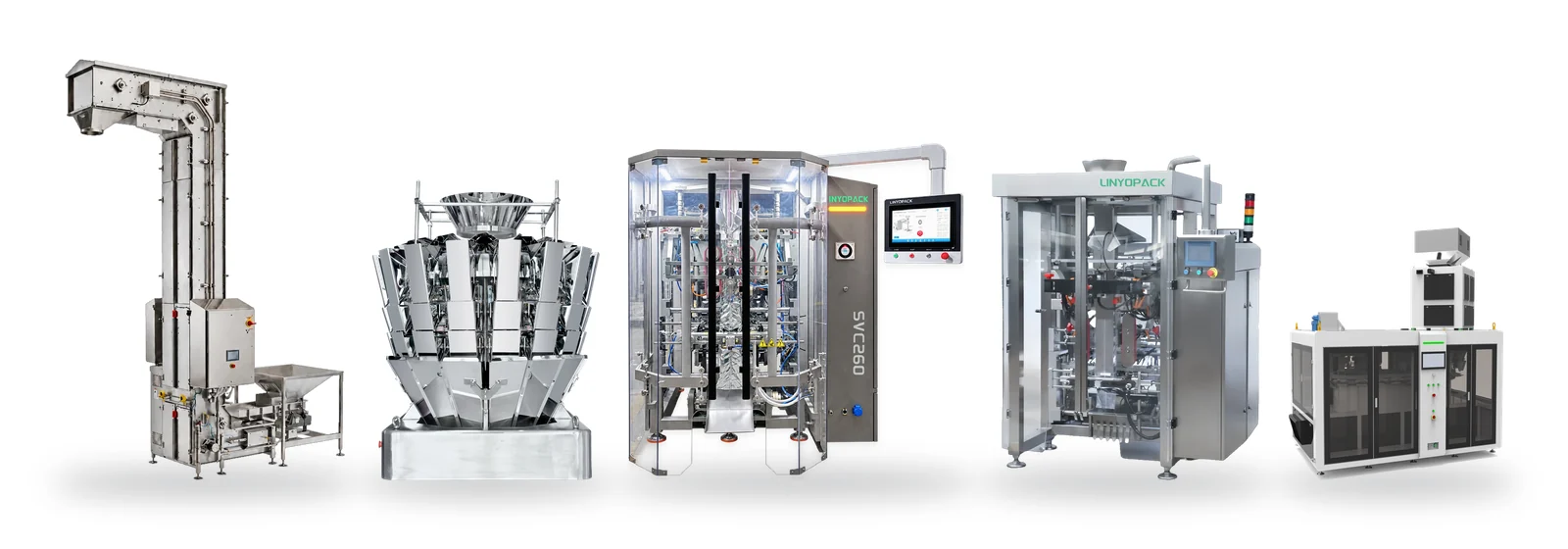
Hygienic or Standard model lifts the kibble to the weigher
Doses the target weight
SVC260, VP, VGT or Wide-Spout, chosen by the package
Checkweighing and contaminant checks
Packs into cases, cases onto pallets
Wide-Spout fillers weigh, fill and cap in one machine, so they take the product straight from the conveyor.
LINYOPACK machines
Start from the package: each packaging machine below is labelled with the bags or pouches it makes. Handling, weighing, inspection and end-of-line modules complete the line.
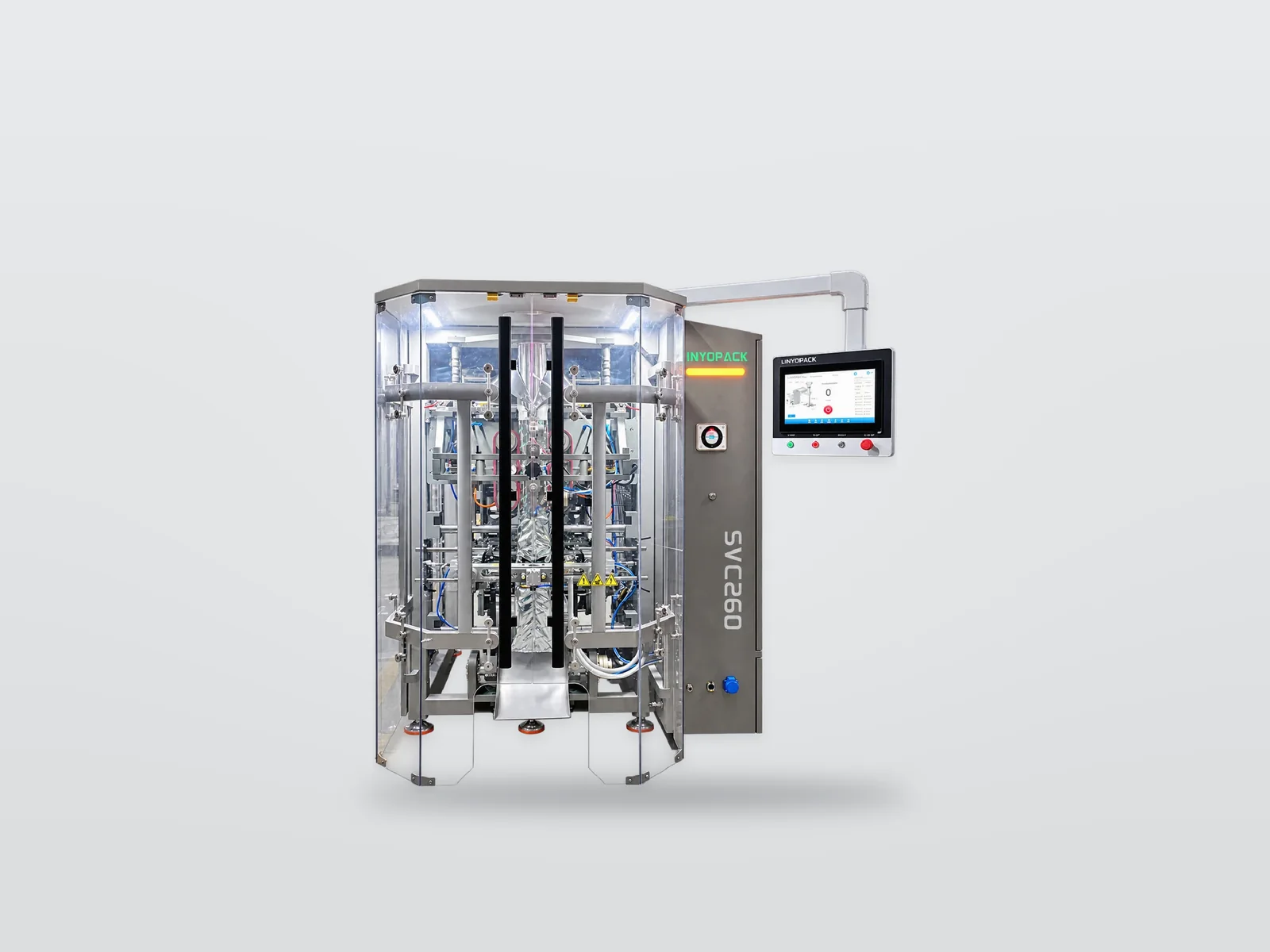
Continuous motion for higher outputs. Bags up to 260 mm wide and 400 mm long, up to 160 bags/min.*
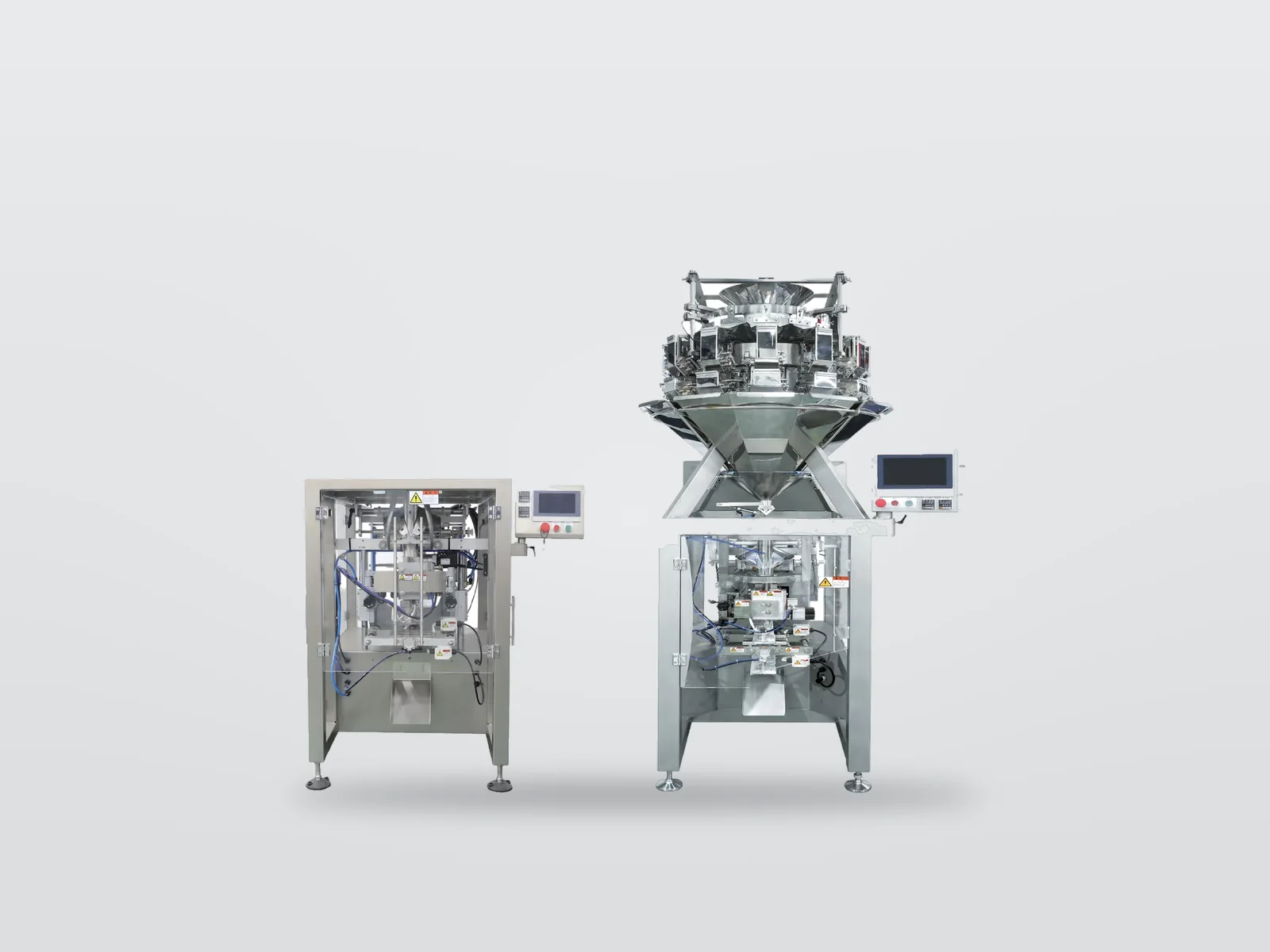
Compact baggers for lower outputs. 20–90 bags/min,* film up to 520 mm wide.
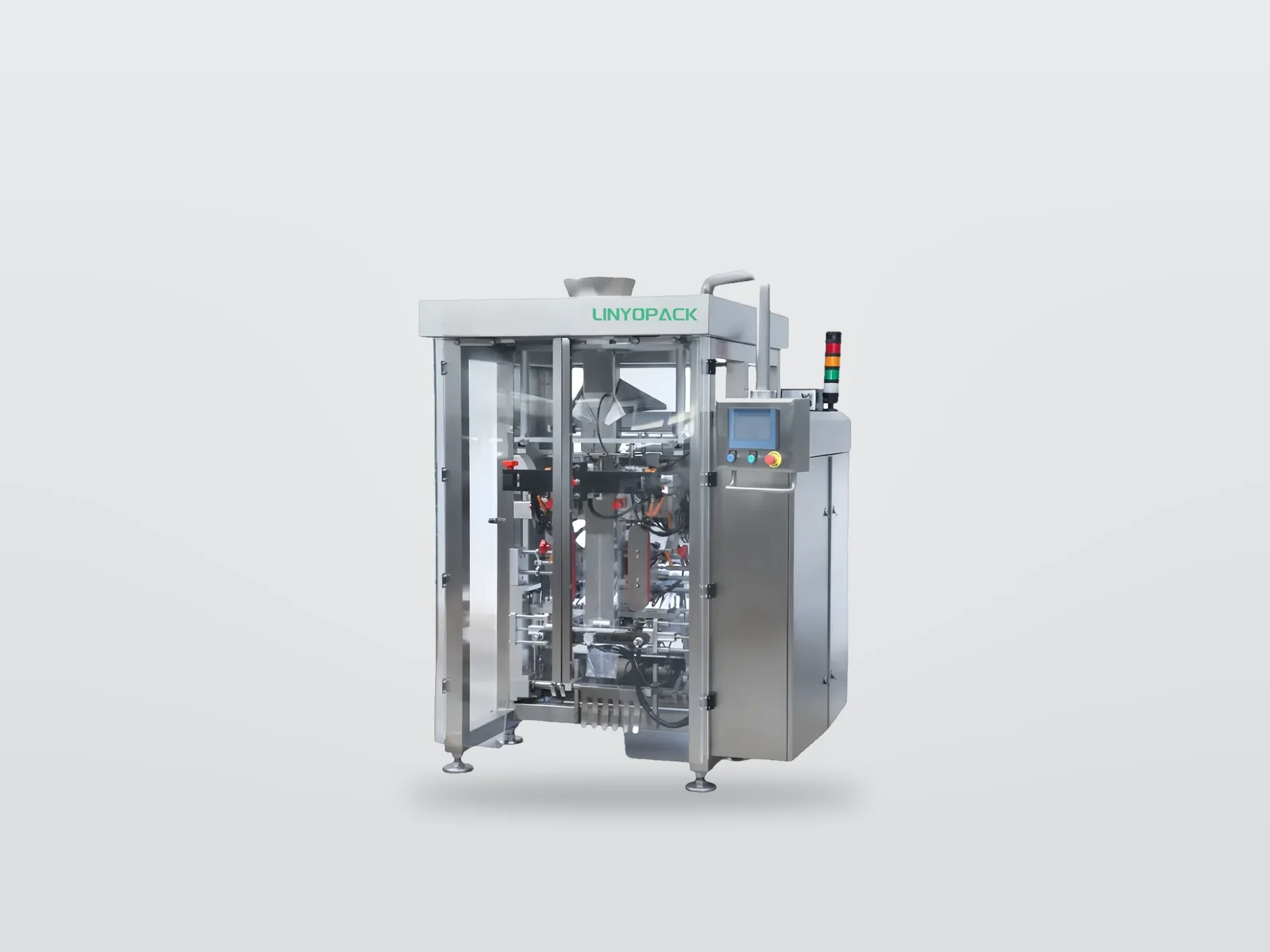
Front panel up to 300 mm wide, up to 80 bags/min.*
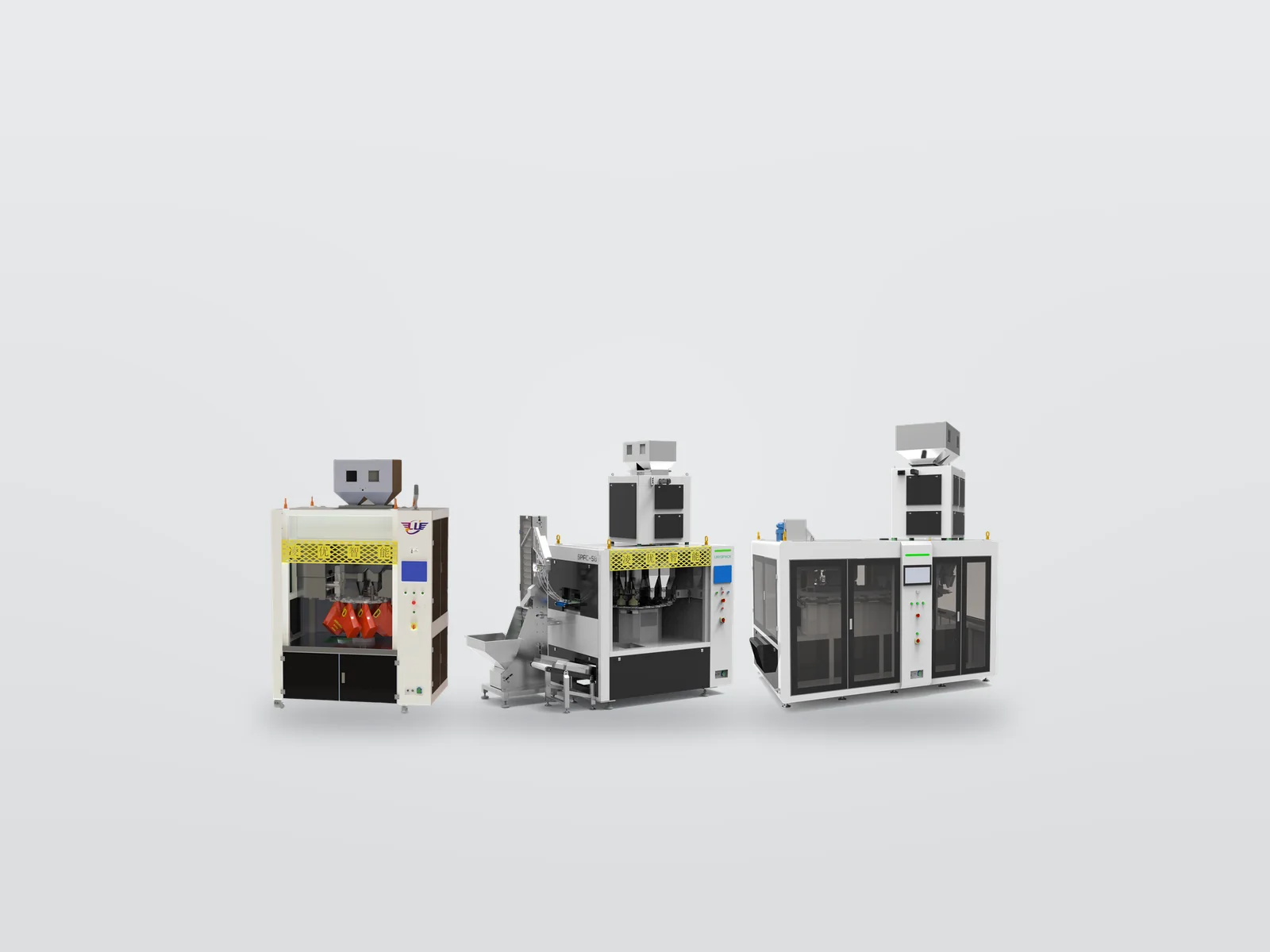
Weighs, fills and caps stand-up pouches with a 33 mm angled spout. Three models for different outputs.
*Machine maximum. Actual output depends on product, fill weight, bag size and film.
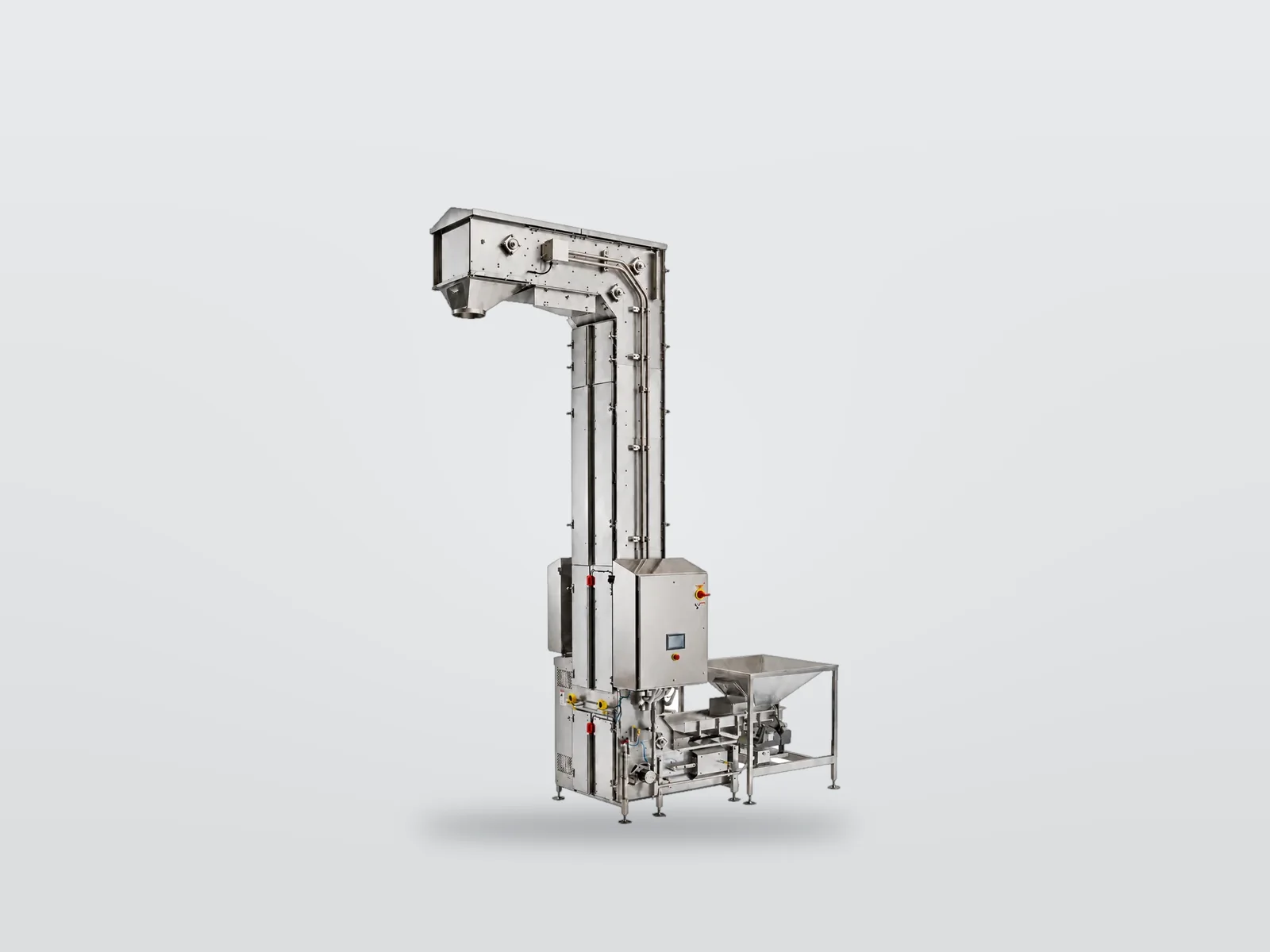
Hygienic and Standard models, both used for feed and pet food. 10–20 m³/h and up to 25 m lift, in Z-type and C-type layouts. We check the capacity in kg/h with your bulk density.
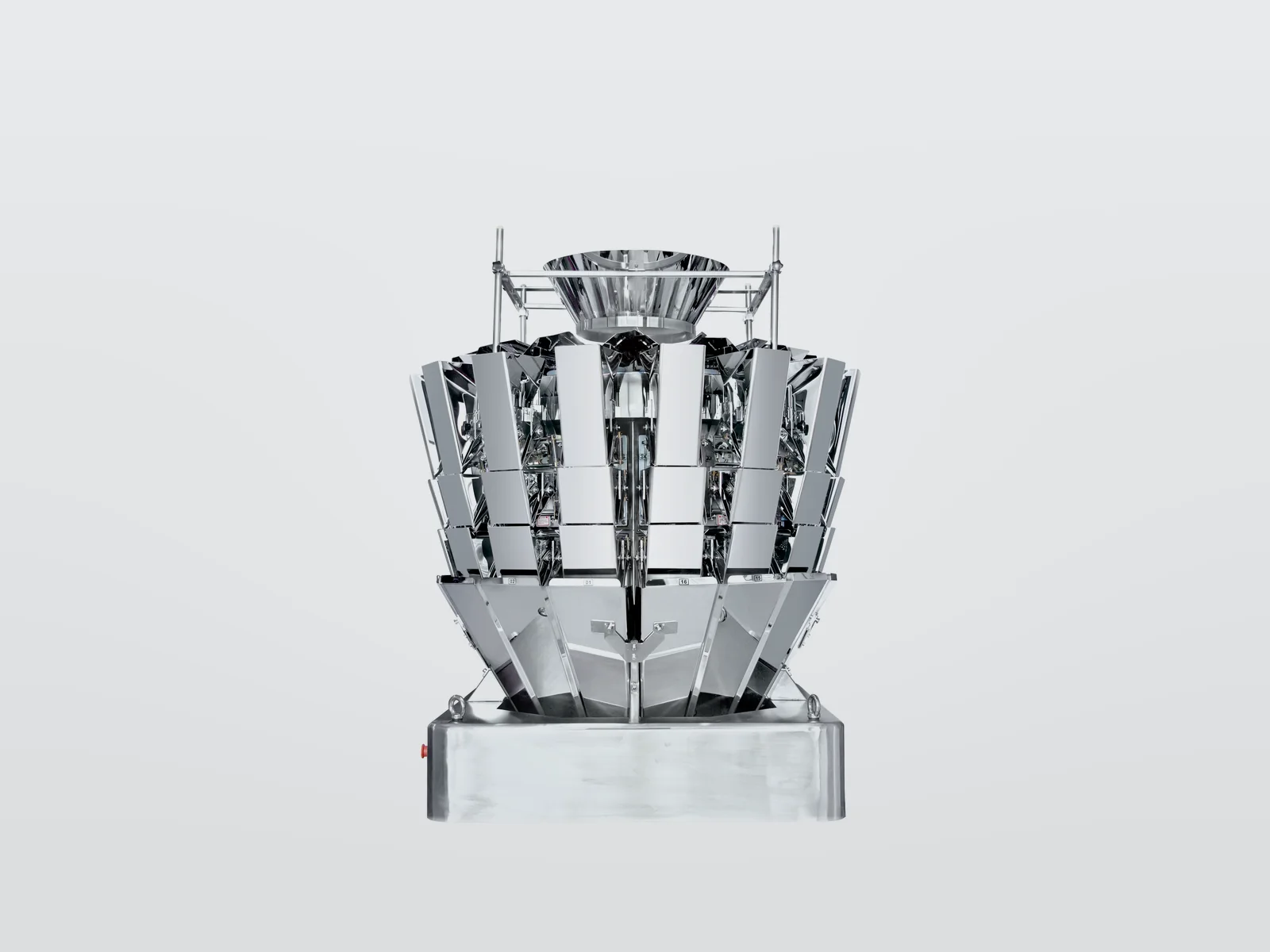
Configured around the kibble size, the bulk density, the target weight and the dose rate the packaging machine needs.
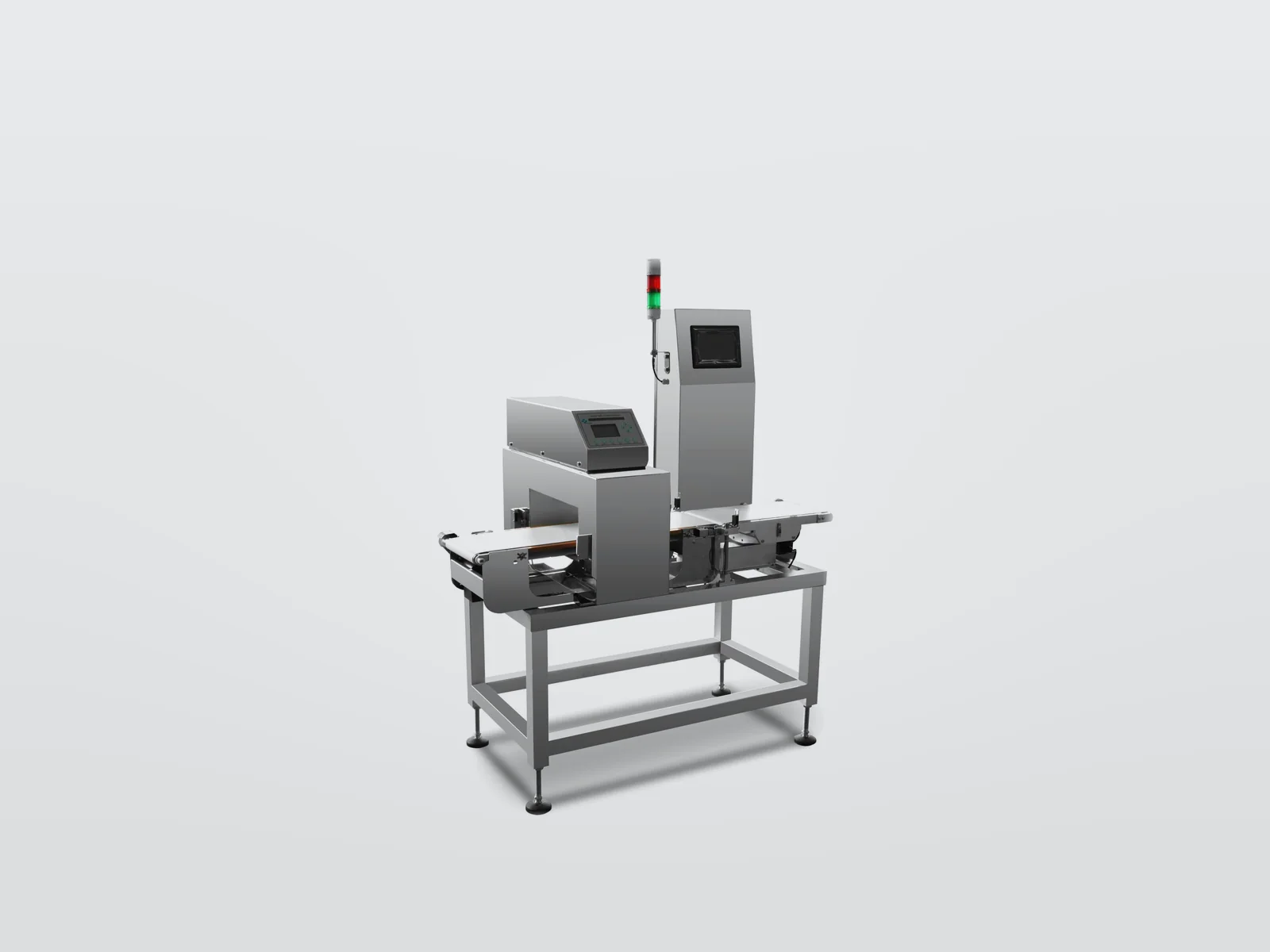
Checkweighing, metal detection, combined units, or X-ray where the application calls for it. The method is chosen once the product and package are known.
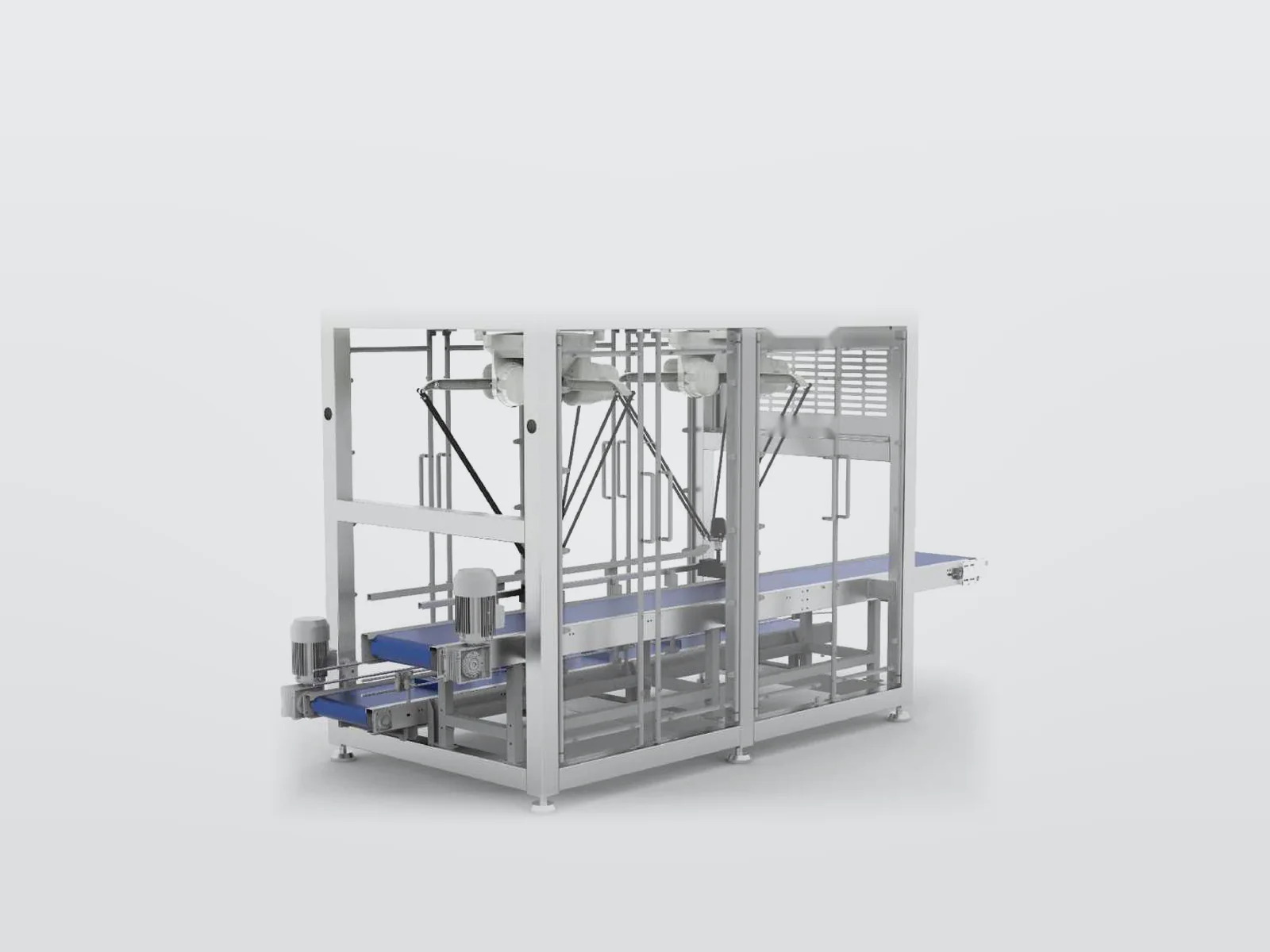
Robotic case packing and palletizing, integrated around the finished bag or pouch, the case pattern, the case rate and the pallet pattern.
A pet food line runs at the pace of its slowest stage. The conveyor is rated in m³/h, so we convert it to kg/h with your bulk density and compare it with what the packing line needs.
Supply must stay above demand. We set the final line target from product tests and agreed FAT conditions.
Request a Packaging TestEnough kg/h at your bulk density
Enough sustainable doses per minute
Enough good packs per minute
Enough accepted packs per minute
Enough cases per minute at the packs per case you need
Keeps up with the case rate
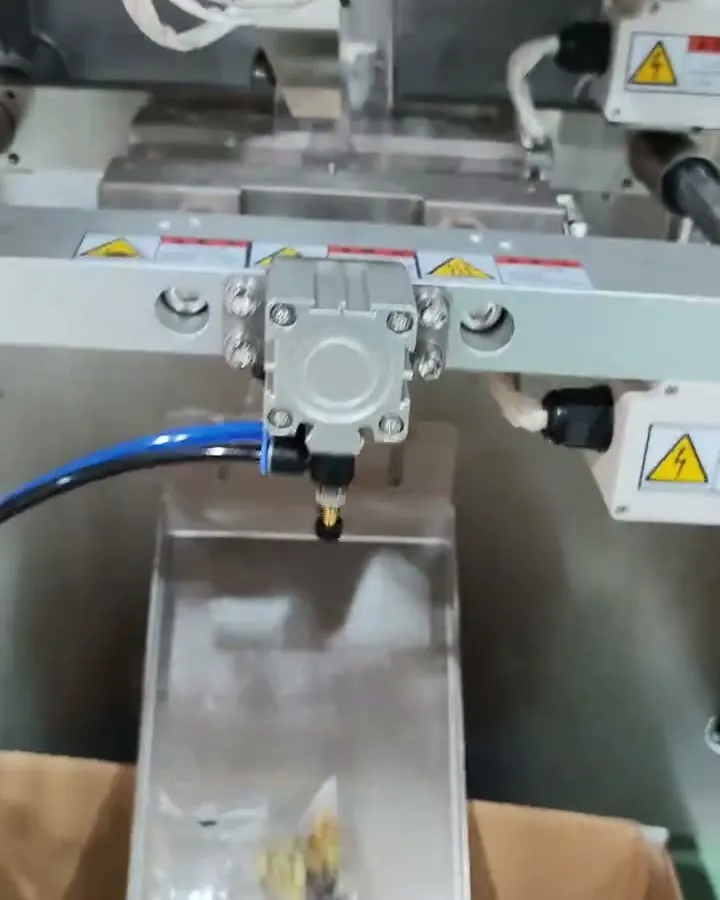
Send a sample or the product details. We run them before the final configuration is fixed.
How the packaging test worksWhat to send
Pet food sample or product specification
Kibble size and bulk density
Target fill weight
Package type and size
Film or pouch sample
Required good output
Plant layout
Inspection requirement
Packs per case
What the test checks
Conveyor throughput in kg/h
Fines and broken pieces
Carryover in buckets and hoppers
Weight result
Bag forming and seal quality (SVC260, VP, VGT)
Pouch opening, filling and capping (Wide-Spout)
Sustainable output
Reject and stop causes
Downstream handling
Photo: VP Series running in our workshop.
The machines, industry and full system behind this application.
The SVC260, VP and VGT baggers, the Wide-Spout pouch fillers and both pendulum bucket conveyors.
Start from the package. Pillow and side gusset bags: SVC260. Pillow and chain bags on a compact line: VP series. Quad-seal bags with or without a back seal: VGT series. 1–5 kg spouted pouches: Wide-Spout.
Both make pillow bags. The SVC260 runs continuous motion for higher outputs. The VP series is the compact choice for lower outputs. Speeds on both depend on the product, fill weight, bag size and film.
Yes. The VGT series makes quad-seal bags in both versions.
Stand-up pouches of 1–5 kg with a 33 mm angled spout. Three models cover different outputs.
160 bags/min is the SVC260's machine maximum. The output of a pet food line is set from the actual product, weighing, package and line conditions.
We convert the conveyor m³/h to kg/h with your actual bulk density, then compare it with the line demand: good packs per hour × fill weight.
Yes. Checkweighing, metal detection, robotic case packing and palletizing can be integrated around the bag or pouch, the case and the pallet.
Send the product, target weight, package format, required output and plant layout. We will use them to choose the packaging machine and plan the test.
We reply within 1 working day.
Quick enquiry
You're enquiring about
Dry Pet Food Packaging
Product packaging application
We'll include this application in your enquiry automatically.
We use these details to reply to your enquiry. Read our Privacy Policy.