
01
Juice on the flange
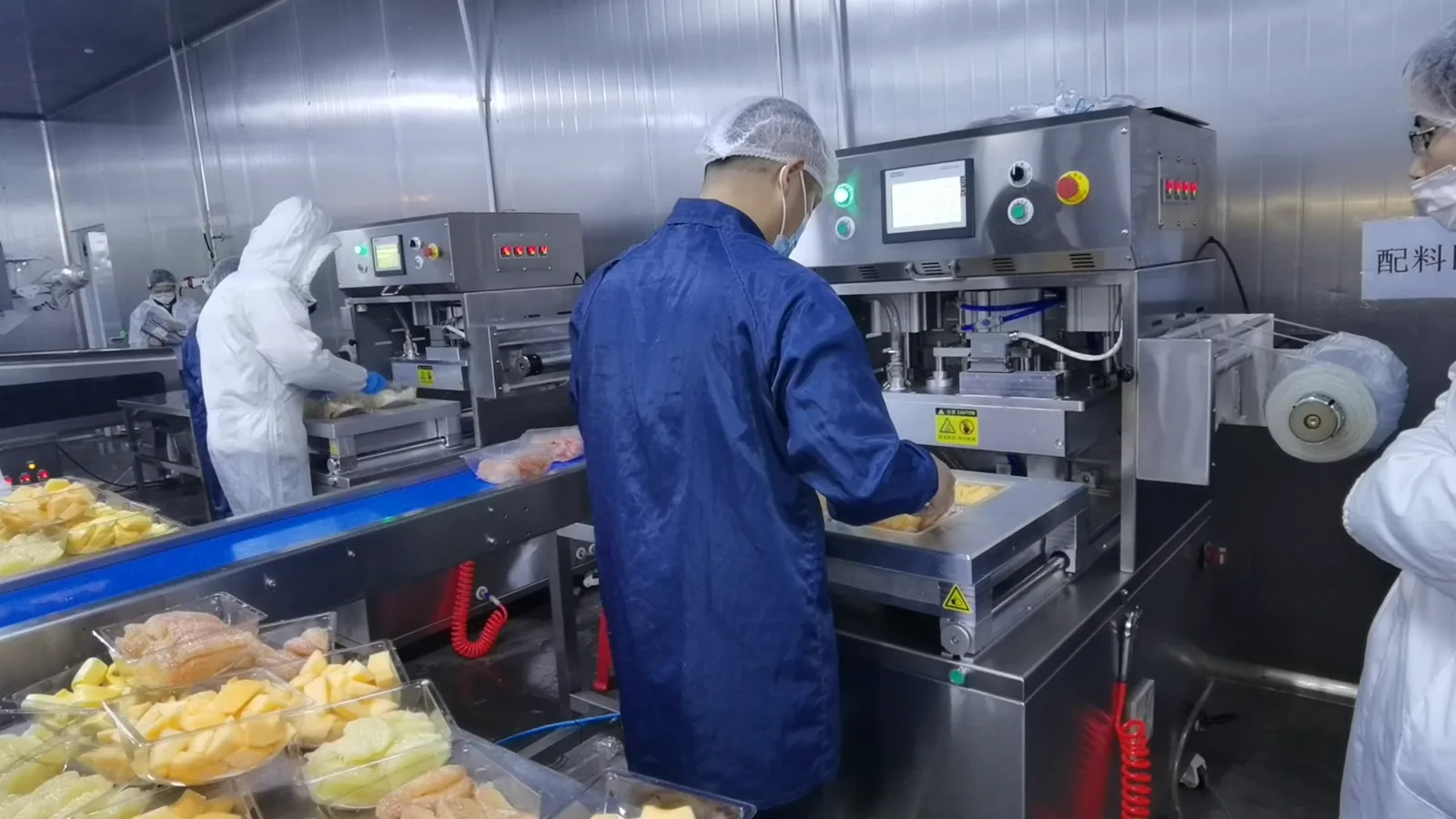
Cut fruit releases juice. Juice and pulp on the tray flange are a common cause of weak or leaking seals.
What we do · Seal quality with juice on the flange is checked with your fruit and tray in the test.
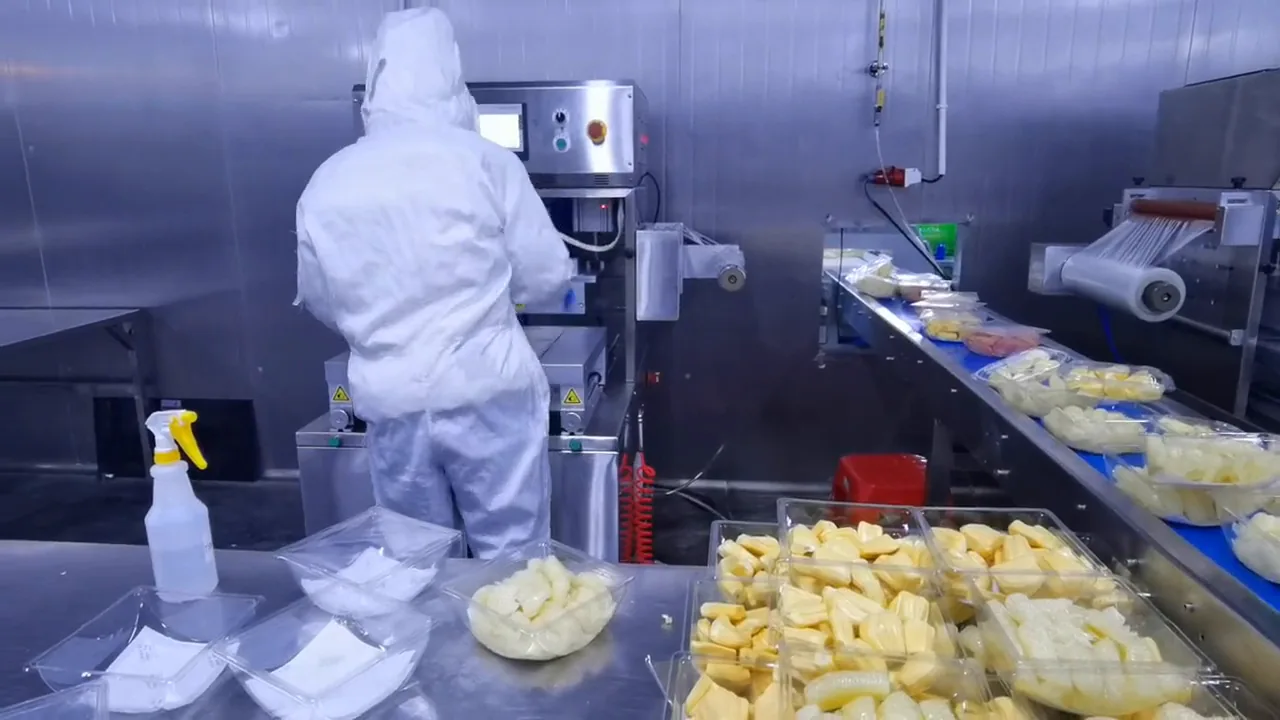
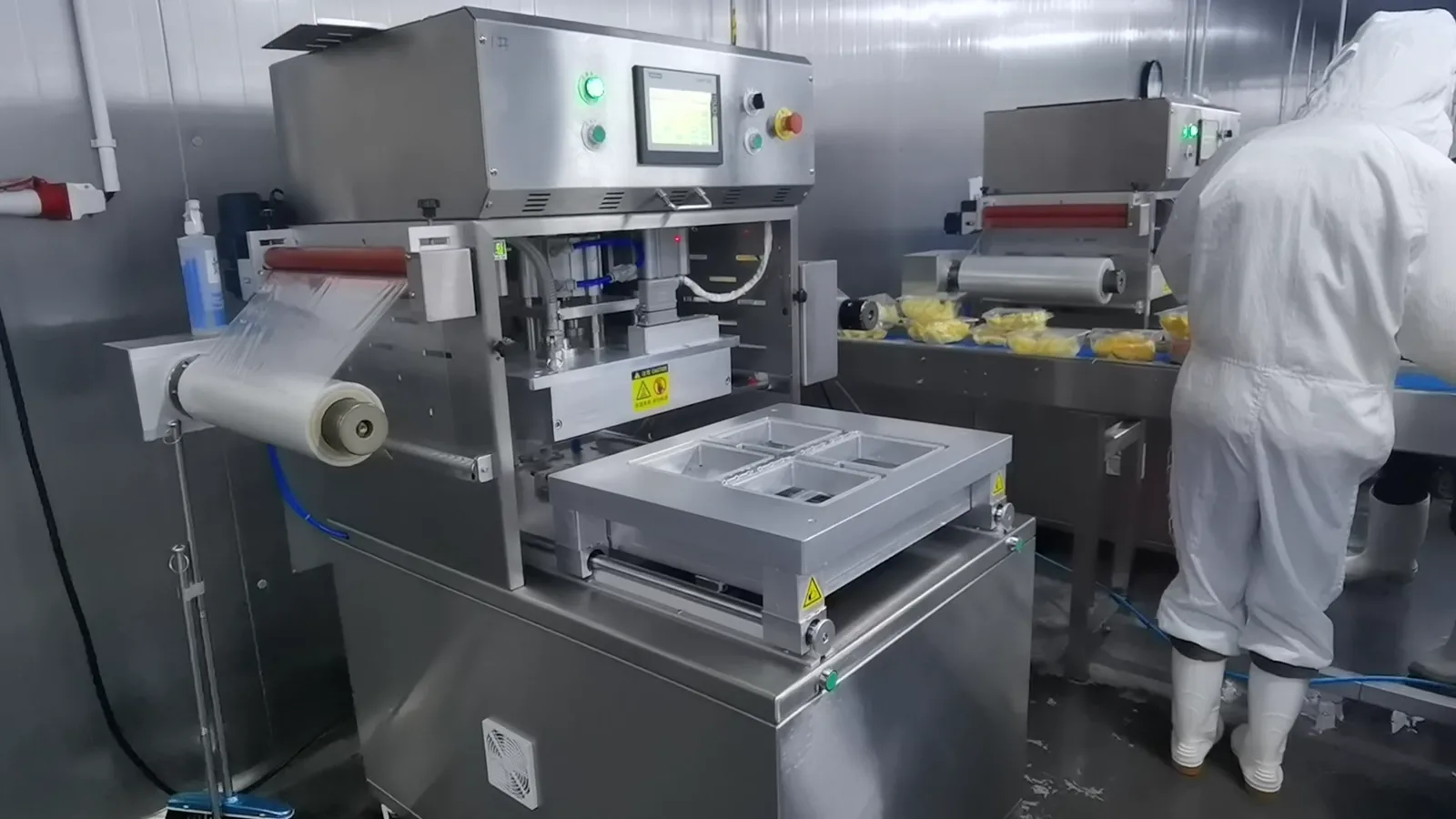
Seal cut fruit in trays under a gas mixture chosen for the fruit. Our M-450 semi-automatic MAP tray sealer suits smaller batches and frequent product changes; the Hybrid Pro T680 runs automatic MAP and seal-only packs for continuous lines.
Typical route: cutting and portioning → tray loading → tray sealing → labeling → chilled storage
Six points that decide whether a cut fruit tray line runs well.
Cut fruit releases juice. Juice and pulp on the tray flange are a common cause of weak or leaking seals.
What we do · Seal quality with juice on the flange is checked with your fruit and tray in the test.
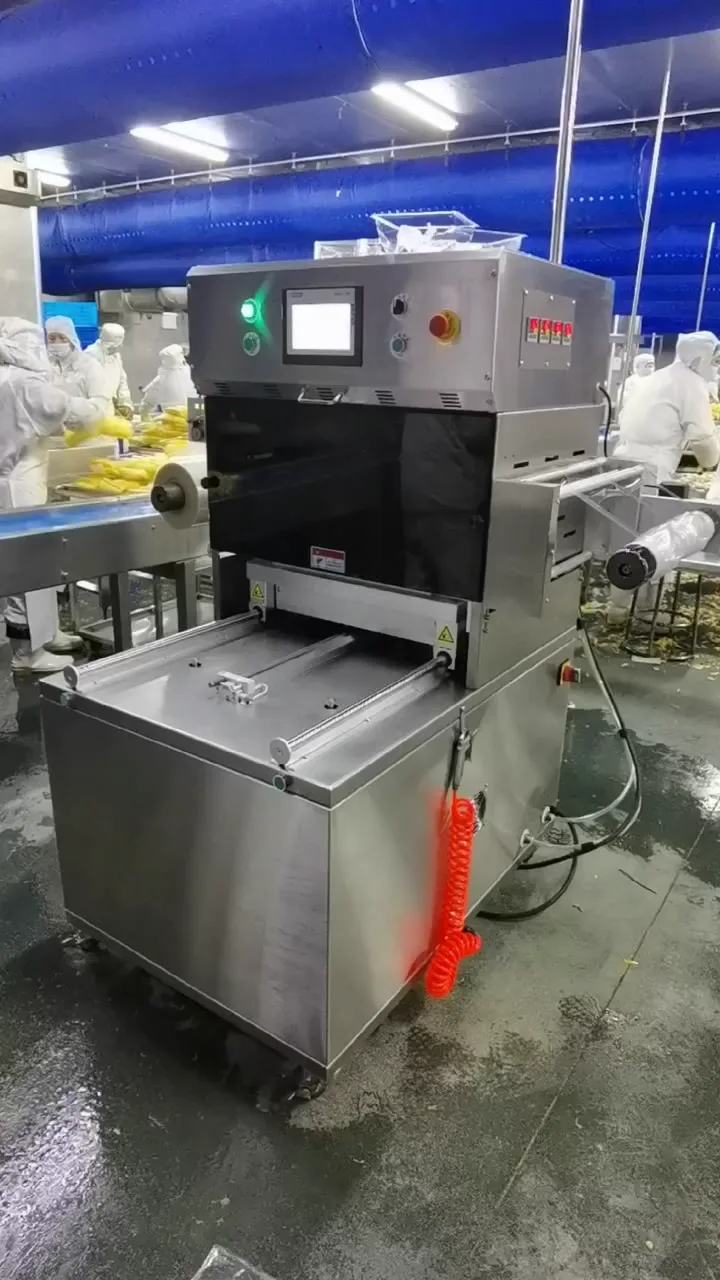
Cut fruit keeps respiring after it is packed. The right mix of CO₂, N₂ and O₂ depends on the fruit, and a mix that suits one fruit can spoil another.
What we do · The gas mixture is set for your fruit. Both machines mix up to three gases with ±2% accuracy.*
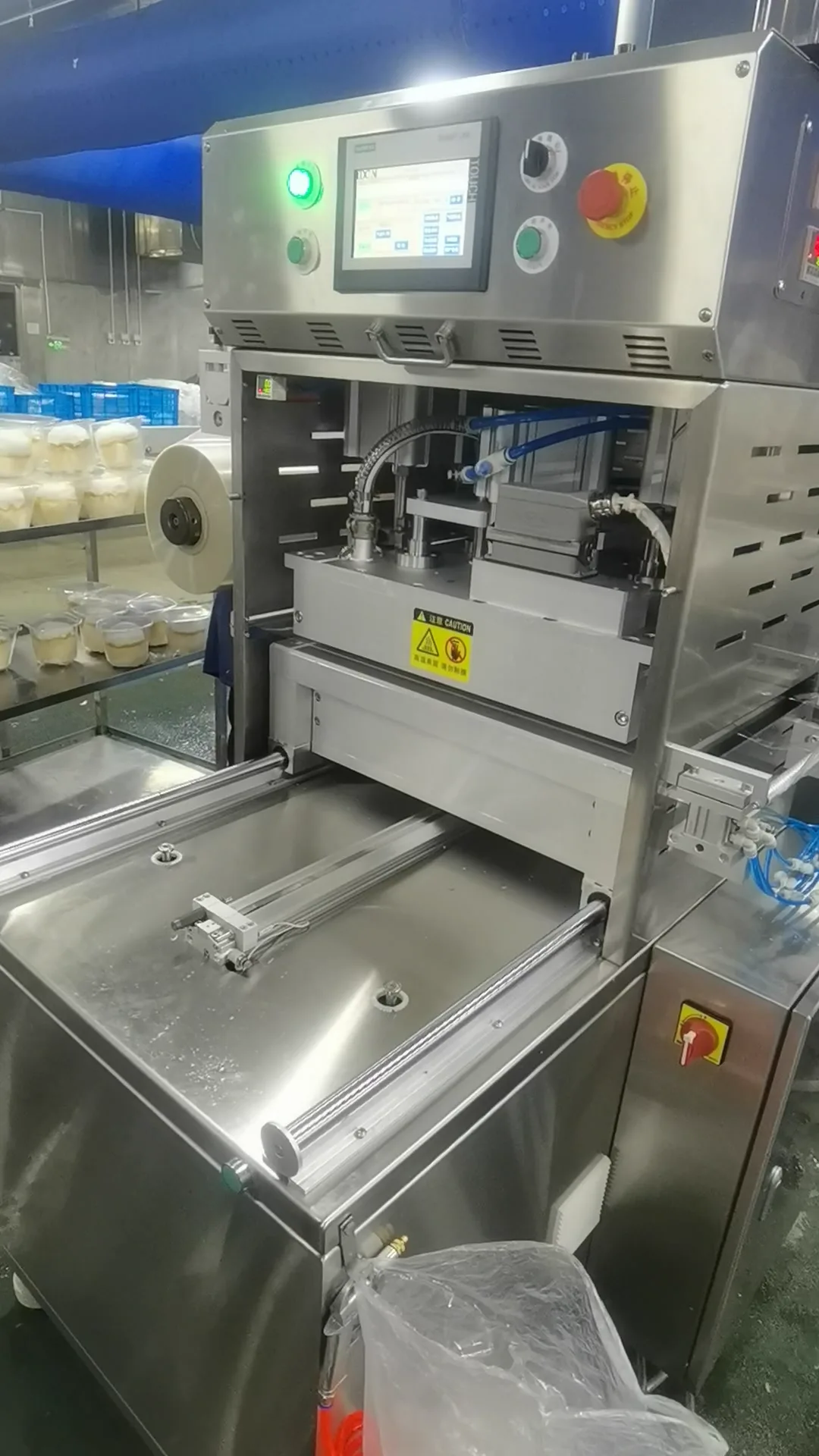
Chunks and slices that sit above the tray rim get caught in the seal or press against the film.
What we do · Product height and placement are checked against your tray.
Chilled, moist fruit can fog the lidding film and hide the product on the shelf.
What we do · Your lidding film is run in the test, so you see the finished pack before you order.
Cut fruit is eaten without further washing or cooking, so contact parts and changeovers have to be easy to clean.
What we do · The M-450 has a SUS304 stainless steel body and tool-free mold removal for cleaning and format changes.
MAP can slow browning and spoilage, but no machine gives a fixed shelf life. It depends on the fruit, the gas mix, the tray, the film and the cold chain.
What we do · We seal test packs with your fruit, so you can run your own shelf-life checks.
*Nominal value from the M-450 technical sheet; T680 gas mixing accuracy as stated on the T680 page.
Both seal cut fruit under a modified atmosphere. Choose by output and how much of the work you want automated.
M-450
T680
Operation
Trays loaded and unloaded by hand
Automatic tray feeding and transfer
Packaging modes
MAP
MAP, VSP and seal-only
Speed
2–3 cycles/min (nominal)
Up to 20 cycles/min in MAP (machine maximum)
Tray
Tooling made to your tray, up to 350 × 490 mm
Tooling made to your tray; standard tooling seals 4 trays per cycle
Suits
Smaller batches, fruit cups and frequent product changes
Continuous production lines
Customer sites, filmed with permission.
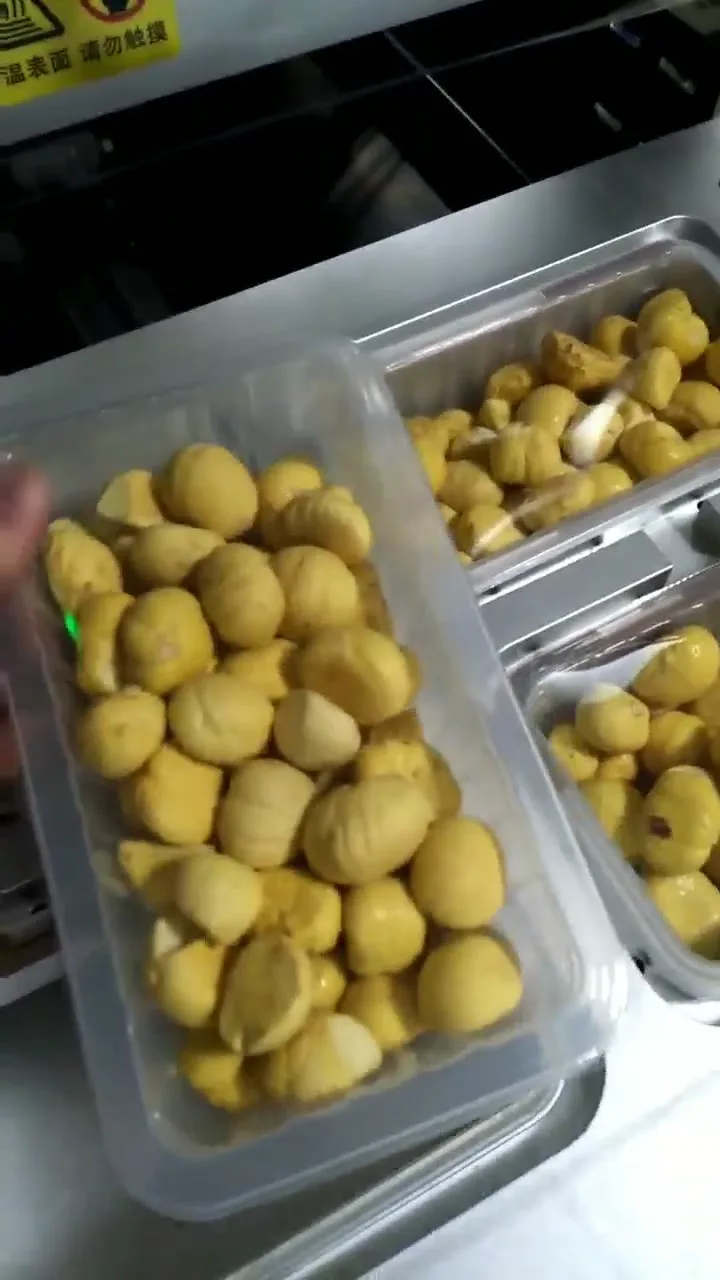
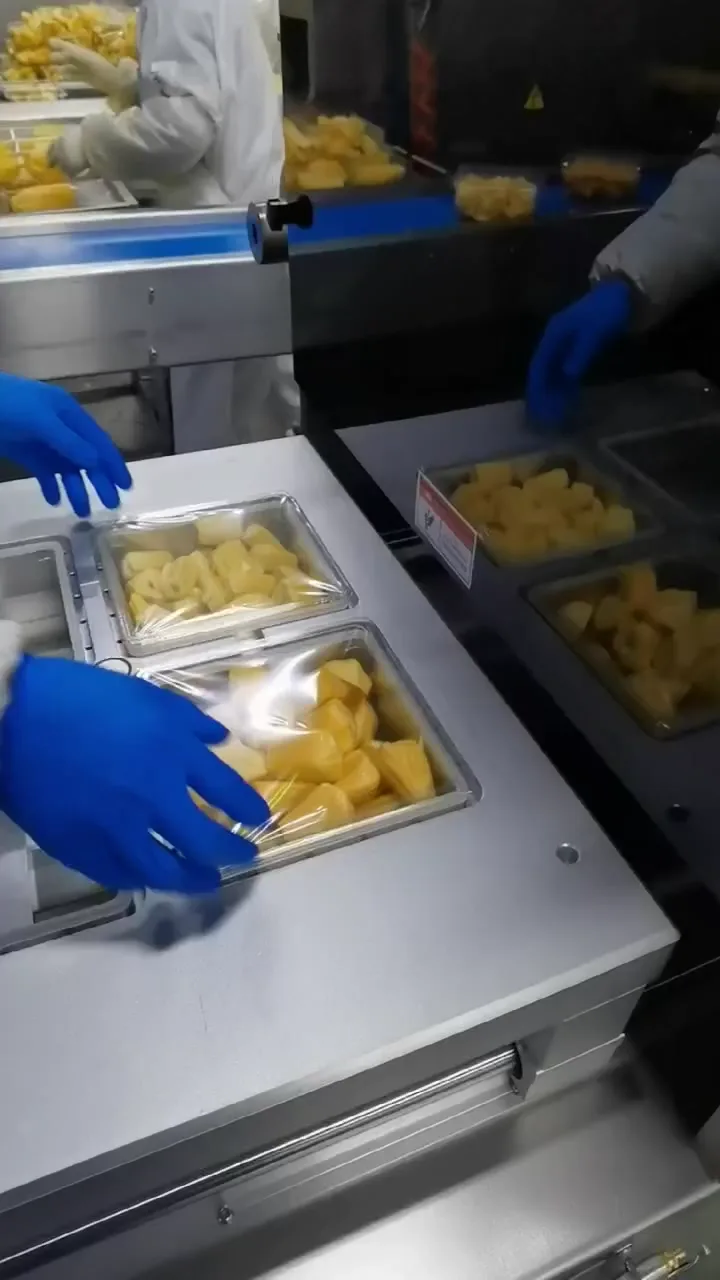
Fresh-cut fruit, jackfruit and coconut eggs (husked whole young coconuts) sealed in MAP trays on the M-450 at customer sites.
Done in your plant, before packing
By hand or automatic, as the project needs
Vacuum, gas filling, sealing and cutting
Checks and labels on the sealed tray
Packs into the cold chain
We supply the tray sealing. Cutting equipment, tray loading and labeling are planned with you for each project.
Send your tray, lidding film and the fruit, or its details. We seal test packs before the tooling and settings are fixed.
How the packaging test worksWhat to send
Fruit type, cut and piece size
Tray samples or drawing
Lidding film sample or structure
Gas mixture requirement, if you have one
Fill weight per tray
Required output
What the test checks
Seal quality with juice on the flange
Product height and placement in the tray
Vacuum and gas cycle
Film appearance after sealing
Tray and film pairing
Cycle stability
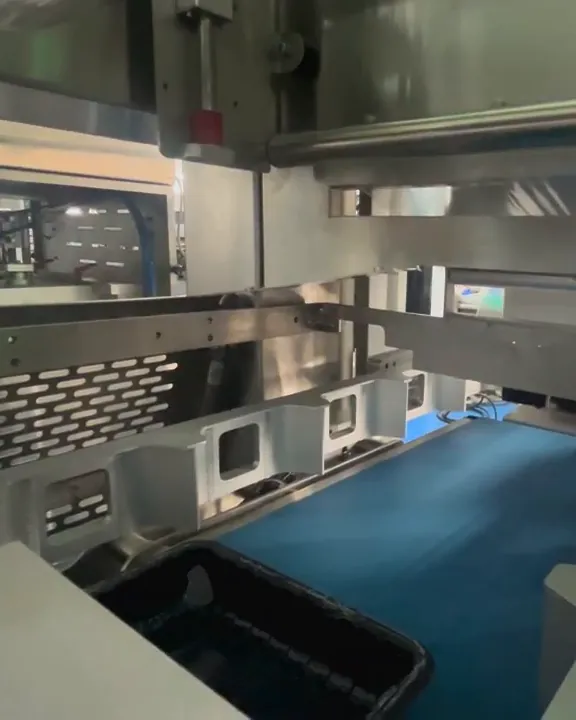
Photo: T680 running in our workshop.
The machine, industry, tray format and services behind this application.
The M-450 suits smaller batches and lines where trays are loaded by hand, at 2–3 cycles/min (nominal). The T680 feeds trays automatically and suits continuous production, at up to 20 cycles/min in MAP (machine maximum).
It depends on the fruit. Both machines can mix up to three gases, usually CO₂, N₂ and O₂, and the mixture is set for your product.
No. Shelf life depends on the fruit, gas mix, tray, film and storage temperature. We seal test packs so you can check it with your own product.
Yes. The tooling is made to your tray samples. On the M-450 the maximum tray size is 350 × 490 mm.
By filling cleanly and keeping the flange dry. We check seal quality with your fruit, tray and film in the test.
Yes. The M-450 also seals fresh meat and prepared foods, and the T680 also runs fresh meat, seafood and ready meals. Tooling and settings change with each product.
Send the fruit, tray, film and required output. We will use them to define the machine, tooling and test plan.
We reply within 1 working day.
Quick enquiry
You're enquiring about
Fresh-Cut Fruit Tray Packaging
MAP tray sealing for fresh-cut fruit
We'll include this application in your enquiry automatically.
We use these details to reply to your enquiry. Read our Privacy Policy.