
What a Frozen Shrimp Packaging Line Includes
A frozen shrimp packaging machine is rarely one machine. It's a short line, and each step has to keep up with the one before it:
- Product feeding. A buffer and transfer conveyor deliver shrimp to the weigher at a steady rate.
- Multihead weighing. The weigher builds each dose from several heads, configured for frozen food.
- VFFS bagging. The bagger forms film into a tube, fills it and seals each bag.
- Inspection. Checkweighing and contaminant checks.
- Case packing. Robotic case packing puts finished bags into cases.
- Palletizing. Cases go onto pallets.
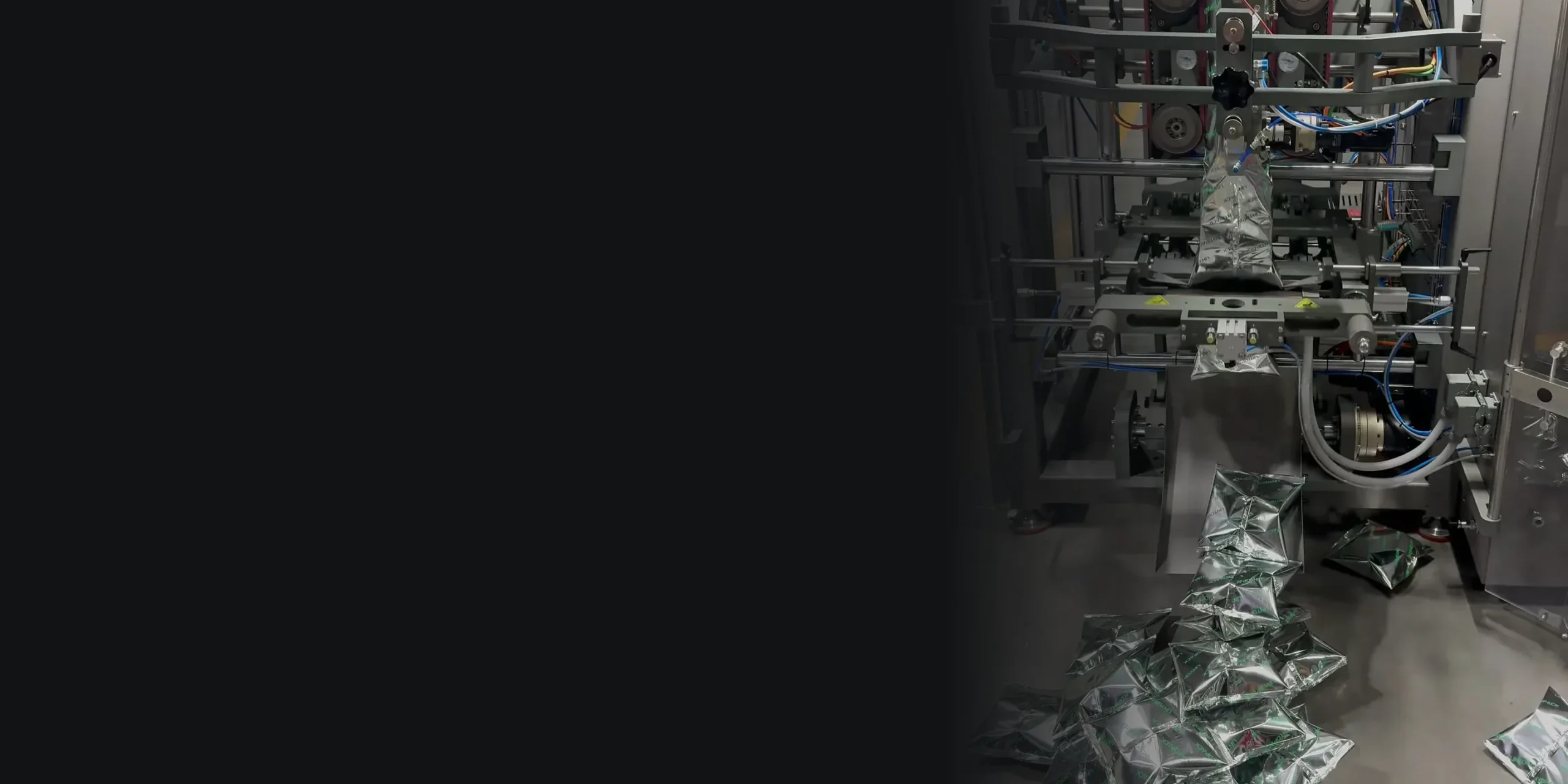
In our frozen food route the bagger is the SVC260 continuous-motion VFFS, which is built for frozen foods and IQF products. It makes bags up to 260 mm wide and 400 mm long. Pillow bags are standard and the strongest first route for shrimp. Side gusset bags are an option where the project needs them.
There's no bucket elevator in that list. Bucket conveyors aren't part of our standard route for frozen shrimp, and if a project needs one, we test it with the frozen product first.
Fresh seafood follows a different route, in MAP or VSP trays. Our seafood packing machines page covers both routes.
Elevating and Weighing Glazed Shrimp
Picture a weigh hopper receiving several shrimp frozen together into one lump. That's what glaze and surface frost do on a weigher. The ice coat that protects shrimp in the freezer also makes the pieces stick together, and clumps feed unevenly. Some heads get too much product, others too little, and the weigher has fewer good combinations to pick from. The weights start to wander.
Piece size causes the second problem. A few large shrimp can push a pack over its target weight. In a small retail bag, one big piece is a large share of the dose. So low fill weights with large count sizes are where giveaway hurts most.
The third problem is easy to overlook: the line knocks the glaze off. Glazed shrimp hit conveyor walls on the way up to the weigher, then fall from the feed into the weigh buckets, from bucket to bucket, and down into the forming tube. Every impact can crack or chip the ice coat. The shrimp reach the bag with less protection than they had at the freezer exit, the glaze in the bag drifts away from what was agreed, and loose ice chips travel with the product towards the seal.
A faster machine fixes none of this. What helps:
- Choose the weigher heads and hopper size for your piece size and target weight.
- Configure the weigher around how your shrimp behave, the target weight, the dose rate the bagger needs and your cleaning routine.
- Keep drop heights low and transfer points few, from infeed to the forming tube.
- Test feeding and dosing stability with glazed product, and check the glaze on shrimp taken from the finished bag. Samples that have thawed or lost their glaze can make feeding look better than it will be in production.
Shrimp Glazing and the Target Weight
Shrimp glazing means coating frozen shrimp with a thin layer of ice that protects them from drying out in cold storage.
Settle this before anyone adjusts a machine: does the fill weight include the glaze?
Glaze adds weight and moisture. In most export markets the net weight on the label has to leave it out. The EU requires glazed food to be labelled with its net weight excluding the glaze (Regulation (EU) No 1169/2011, Annex IX, point 5). Check the rules for your destination market with your QA team.
That rule decides what the weigher is aiming at. If the label states net shrimp weight, the dose going into the bag carries the glaze on top. And glaze isn't perfectly even from batch to batch. Set the target too tight and some packs come up short once they're deglazed. Set it too loose and you give shrimp away in every bag.
So write three things down before the packaging test:
- the net weight on the label, and how glaze is counted against it
- the gross target the weigher runs to
- how the weight result will be checked
We agree the target weight and how glaze is counted before the packaging test, then check the weight result with your product.
Seal Integrity: Ice, Tails and Film
A weak seal undoes the glaze's work. Air gets in during cold storage, and the shrimp near the leak dry out.
Ice in the seal area
Ice fragments and moisture in the seal area cause weak or leaking seals. Some of the glaze knocked off upstream ends up here. If a chip is still in the cross-seal area when the jaws close, the seal forms around it.
Sharp tails
Tails and frozen edges can puncture thin film. A pinhole from a tail is easy to miss on a moving line and can show up later as a bag with frost or dried-out shrimp inside.
Breakage on the drop
Pieces break when they drop too far, and broken shrimp look bad in a clear bag. Drop heights are set for your shrimp and checked in the test.
Film choice
The SVC260 runs laminates, foil and paper-based films from 0.04 to 0.10 mm thick. A thicker, tougher film resists tails better. We explain how film and seal time affect speed in what determines VFFS packaging speed.
Inspection, Temperature and Real Output
Inspection. Glaze, product temperature and film type all affect how well a metal detector works, and metallized or foil film limits it. If you want foil for barrier, choose the inspection method at the same time.
Temperature. Shrimp that wait between steps start to thaw, stick together and lose quality. When the bagger stops, product sits in the weigher and on the feed conveyor, so feeding, weighing and bagging rates should be matched.
Output. A frozen shrimp line runs at the pace of its slowest stage. 160 bags/min is the SVC260's machine maximum, not a frozen shrimp result. Start from what you need to deliver:
Required kg/h = Good bags per hour × Fill weight
For example, 1,200 kg/h of 1 kg bags means 1,200 good bags per hour, or 20 good bags per minute, sustained.
Questions to Ask Any Supplier
- Will you run my glazed shrimp, at my target weight and in my film, before I order?
- How will glaze be counted in the target weight, and how will you check the weight result?
- Where are the drop points between infeed and bag, and how much glaze damage did the test show?
- How is seal quality checked, including product and ice in the seal area?
- Which inspection method works with my film, and does a foil or metallized film rule out metal detection?
- What output do you expect in good bags per minute, with rejects and stops counted, and will that be the target at FAT?
FAQ
Should the fill weight include the glaze?
That depends on the label and your market, so agree it before testing. In the EU, the declared net weight of glazed food must exclude the glaze. The weigher target then has to cover the glaze on top of the net shrimp weight.
Why does glaze break before the shrimp reach the bag?
Glazed shrimp hit conveyor walls on the way up to the weigher and fall several times inside it before dropping into the forming tube. Each impact can crack or chip the ice coat. Low drop heights and few transfer points reduce the damage.
Does foil film rule out metal detection?
It limits it. Glaze, product temperature and film type all affect how well a metal detector works, and metallized or foil film limits it. Choose the inspection method together with the film, once the product and package are known.
Can I test my shrimp before ordering?
Yes. The packaging test is free; you cover the cost of shipping samples to our factory in Hebei, China. You get a test video and a written record within 3–5 working days after the samples arrive.
Test Your Frozen Shrimp Before You Order
Send your glazed shrimp, target weight, bag size and film. We run them on the machine free of charge, check weighing, seal quality and output, and send you the video and written record.
Request a Packaging Test