
01
Surface water and drip
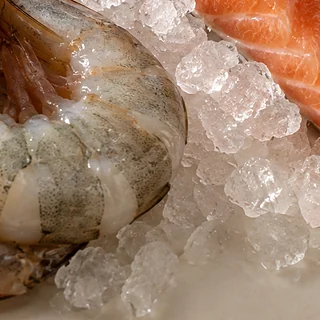
Water and drip from fish and shellfish reach the tray flange and cause weak or leaking seals.
What we do · Every packaging test checks seal quality and water on the flange.
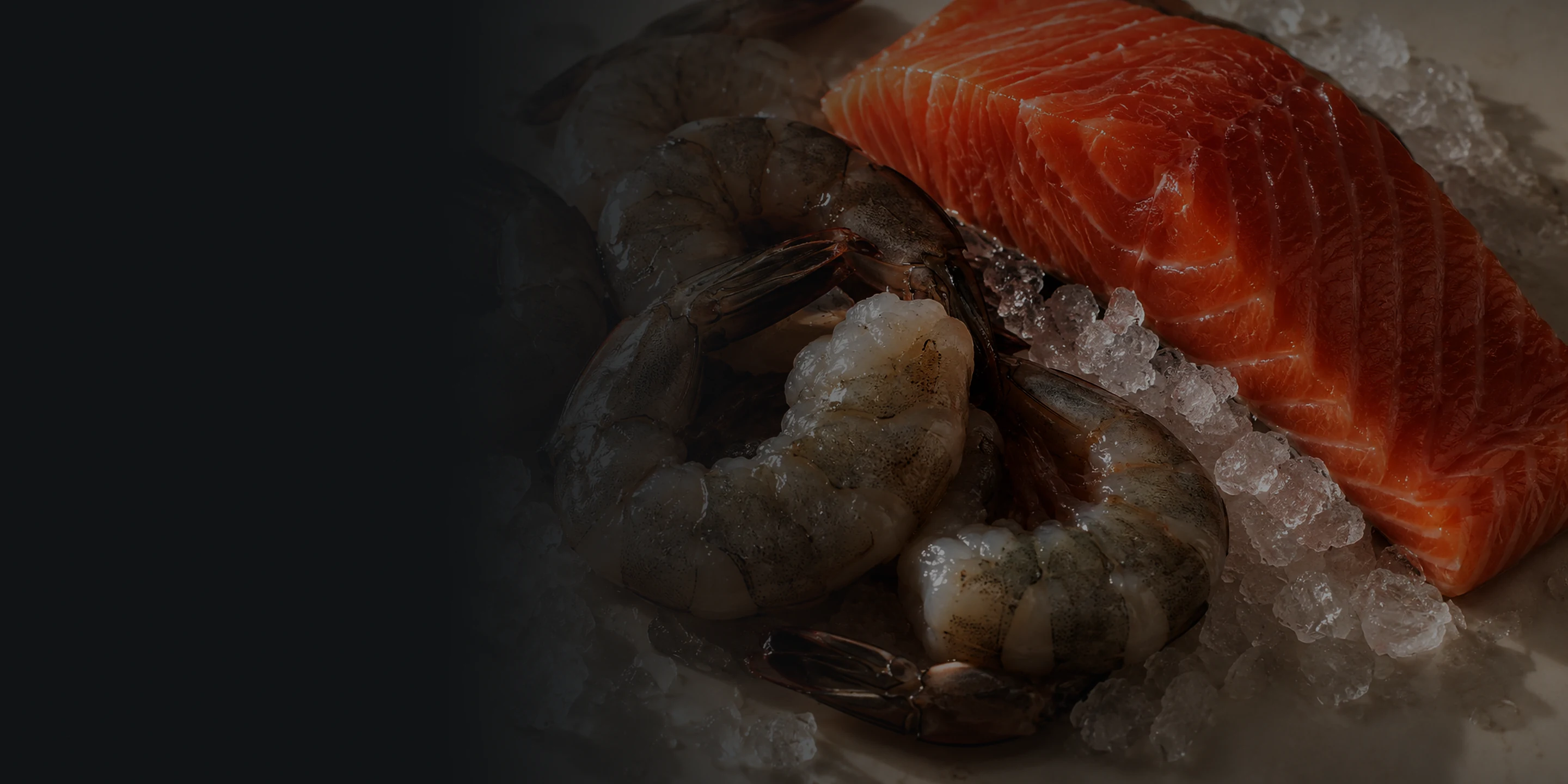
Build the tray packaging around the seafood, the tray, the film and the packaging mode. Our Hybrid Pro T680 tray sealer lists seafood and runs MAP, VSP and seal-only packs on one machine.
Typical route: tray supply → product loading → T680 tray sealing → inspection → case packing
Six points that decide whether a fresh seafood tray line runs well.
Water and drip from fish and shellfish reach the tray flange and cause weak or leaking seals.
What we do · Every packaging test checks seal quality and water on the flange.
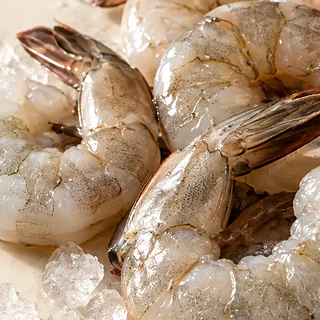
Shells, fins and bone edges can pierce the film, most of all when skin film is drawn tight in VSP.
What we do · Film and packaging mode are checked against the edges of your product.
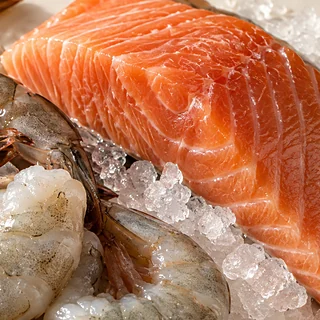
Whole fish, fillets and portions sit differently in the tray. Pieces above the rim get caught in the seal.
What we do · Product height and position are checked against your tray.
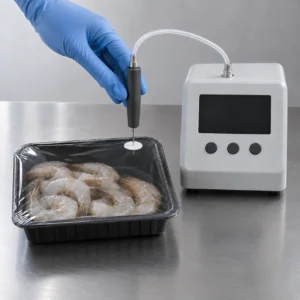
Seafood products need different gas mixes, and MAP results depend on how much oxygen stays in the pack.
What we do · The T680 mixes O₂, CO₂ and N₂ with ±2% accuracy. The mix for your seafood is set in testing.
AI sampling illustration; no measured result is shown.
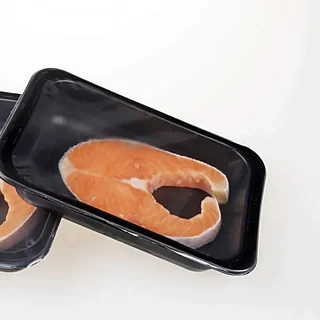
VSP suits some seafood better than others. Shape, height, edges and shells decide how the skin film forms.
What we do · VSP is checked with your product, tray and film before it is chosen.
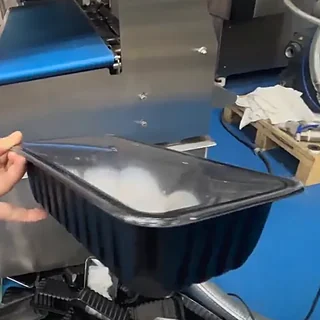
Fresh seafood warms up while filled trays wait for the sealer.
What we do · Tray supply, loading and sealing rates are matched so filled trays do not wait.
Tray supply, loading and sealing are planned together, then matched to the seafood.
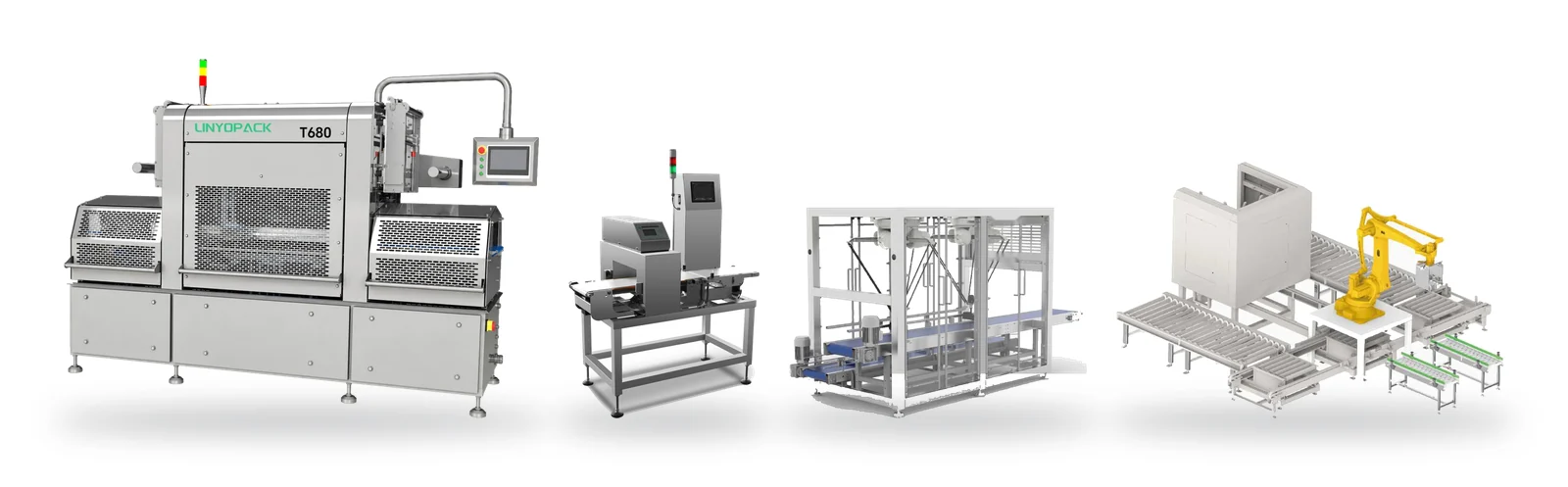
Empty trays to the line
By hand or automatic, as the project needs
MAP, VSP or seal-only
Checks and labels on the sealed tray
Trays into cases, cases onto pallets
Tray denesting, automatic loading and labeling are planned for each project.
Each module is chosen for the seafood and the tray, then integrated into the line.
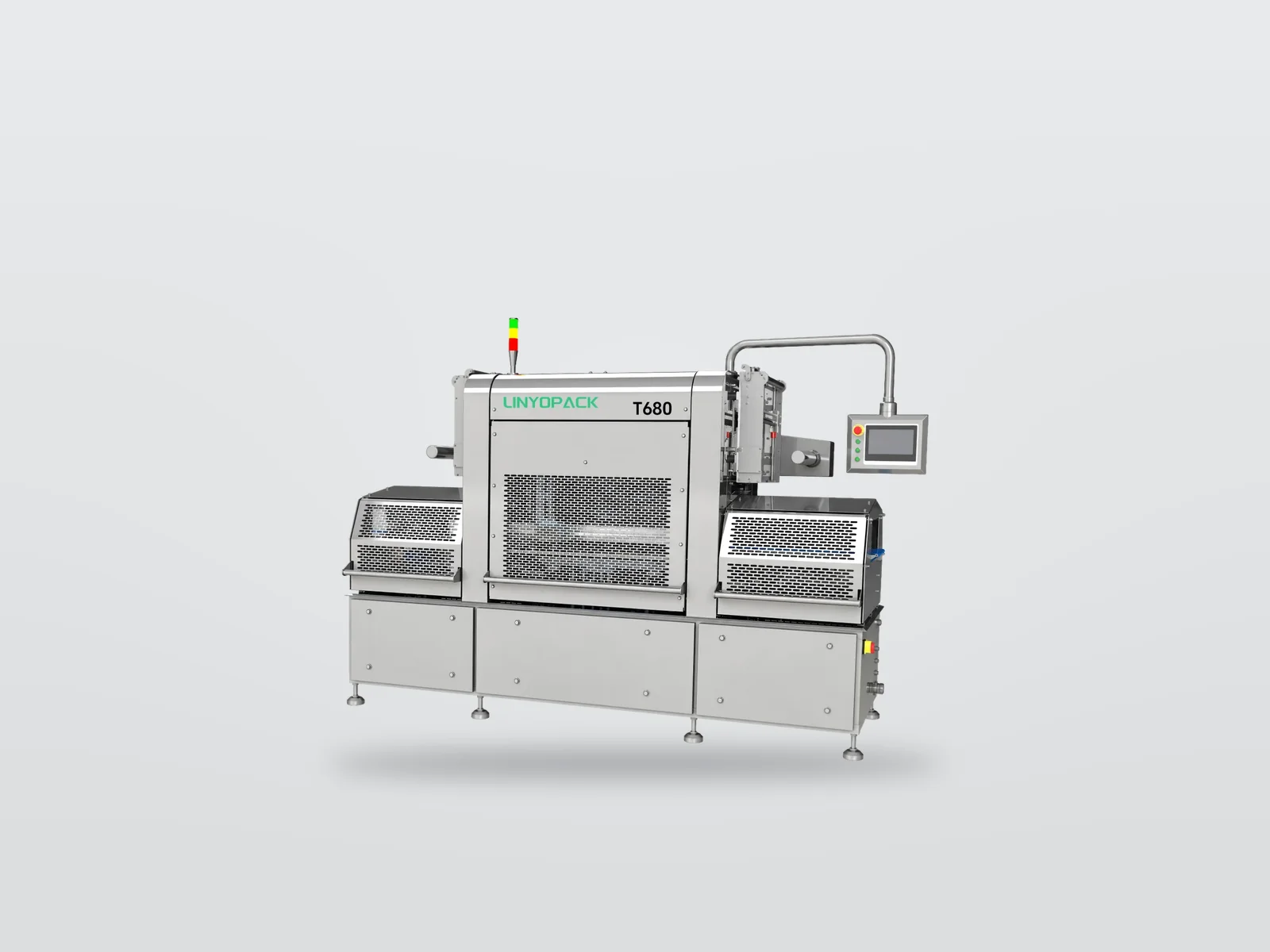
Lists seafood. MAP, VSP and seal-only on one machine, on plastic or paper-based trays. Up to 20 (MAP), 12 (VSP) or 25 (seal-only) cycles/min.*
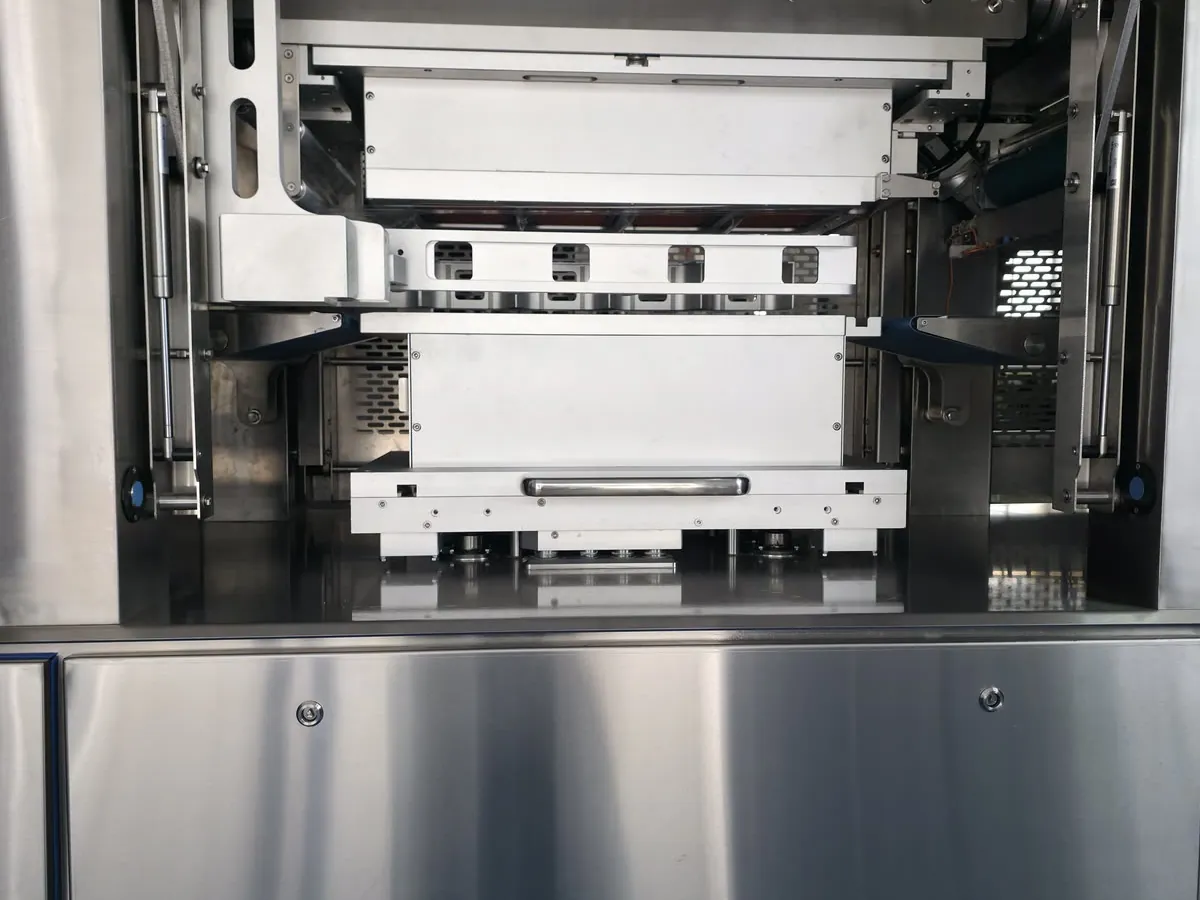
Made for your tray and cavity layout. Standard tooling seals 4 trays per cycle, and a quick-change cart swaps tooling in about 15–30 min.
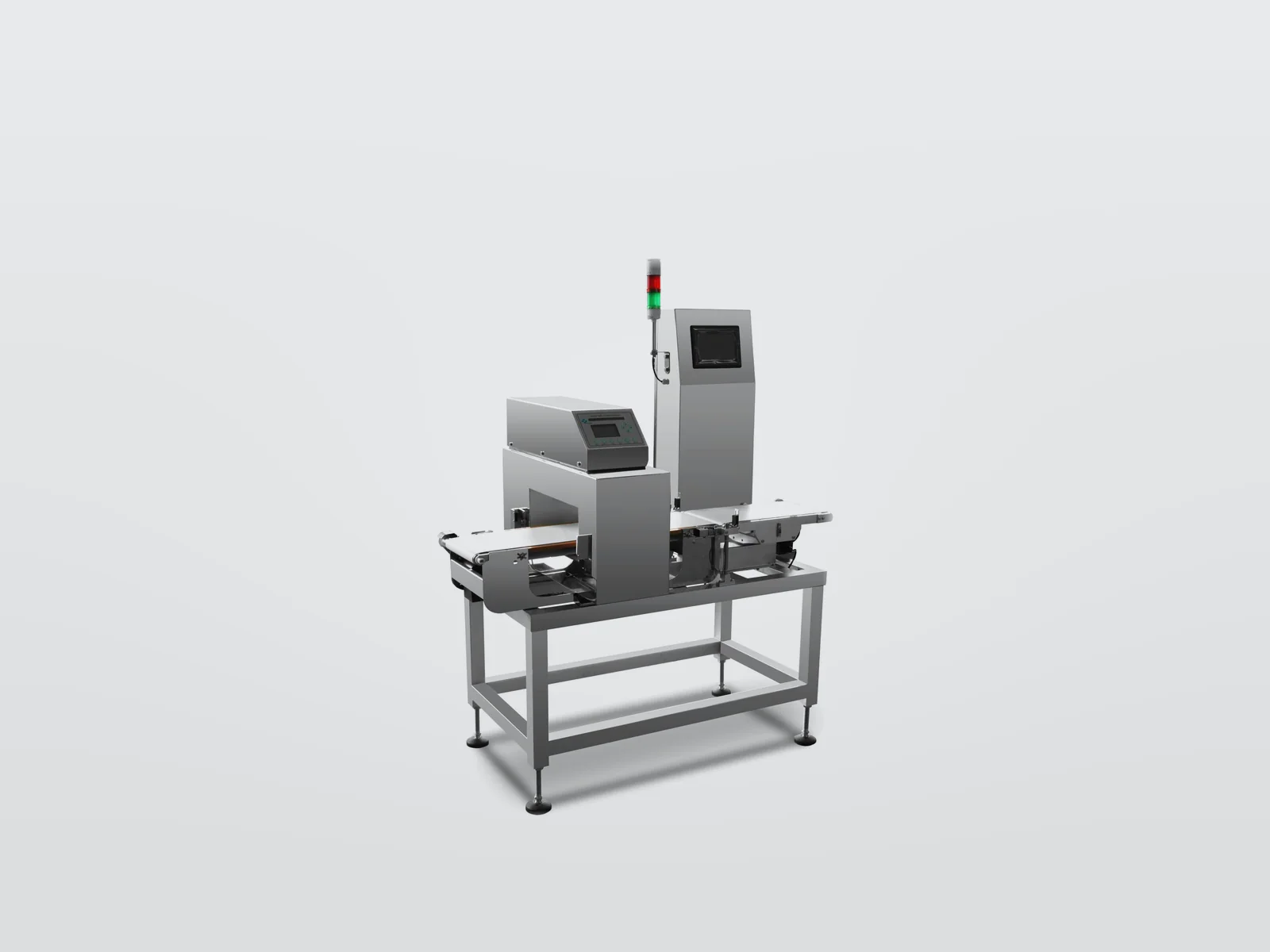
Checkweighing, metal detection, combined units, or X-ray where the application calls for it. The method is chosen once the product, tray and film are known.
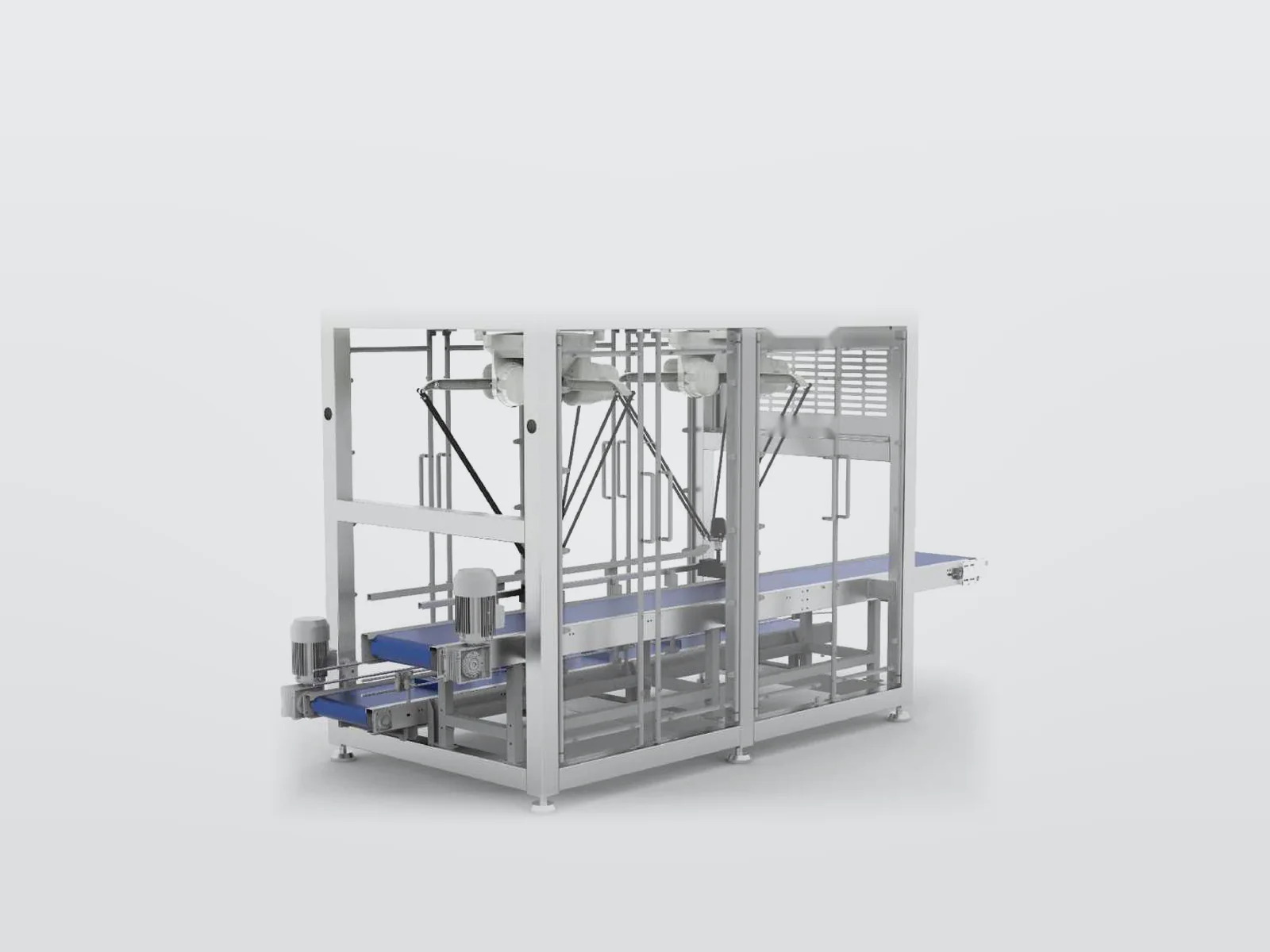
Robotic case packing and palletizing, integrated around the sealed tray, the case pattern, the case rate and the pallet pattern.
*Machine maximum. Actual output depends on product, tray, film, gas mixture and tooling.
A fresh seafood tray line runs at the pace of its slowest stage, so we check every stage instead of quoting the sealer's top speed.
Trays per cycle come from your tooling, so we do not multiply the 20 cycles/min maximum by four. We set the line target from tests and agreed FAT conditions.
Request a Packaging TestA steady supply of empty trays
Enough filled trays per minute
A stable vacuum, gas and seal cycle
Enough accepted trays per minute
Enough cases per minute at the trays per case you need
Keeps up with the case rate
Choose the mode first. MAP, VSP and seal-only all run on the T680.
Vacuum, then gas filling with an O₂ / CO₂ / N₂ mix. Residual O₂ below 0.5%.
Up to 20 cycles/min*Vacuum skin packaging: the top film is formed closely around the product. Checked for each seafood product.
Up to 12 cycles/min*Lidding film sealed onto the tray without changing the atmosphere.
Up to 25 cycles/min**Machine maximum. Actual output depends on product, tray, film, gas mixture and tooling.
Seafood is one of the T680's listed applications, and one machine covers all three modes on plastic or paper-based trays. Detailed specifications are on the machine page.
View T680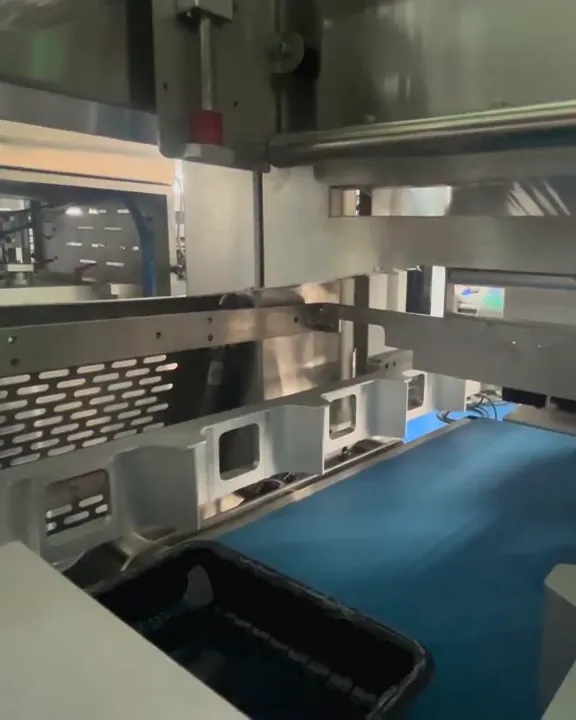
Send a sample or the product details. We run them before the final configuration is fixed.
How the packaging test worksWhat to send
Seafood sample or product details
Whole, fillet or portion, with sizes and weight
Tray sample or drawing, with any absorbent pad
Lidding film sample or structure
Packaging mode
Gas requirement for MAP
Required good output
Inspection and labeling requirement
Trays per case
What the test checks
Product and tray positioning
Surface water on the flange
Vacuum and gas cycle (MAP)
Residual O₂ (MAP)
Skin forming around edges and shells (VSP)
Seal quality
Finished tray appearance
Cycle stability
Sustainable output
Photo: T680 running in our workshop.
The machine, industry, tray format and services behind this application.
Yes. Seafood is one of the T680's listed applications. The setup for your product is defined from the seafood, tray, film and packaging mode.
MAP, VSP and seal-only, all on the T680. The tooling and settings change with the mode and the tray.
Up to 20 cycles/min in MAP, 12 in VSP and 25 in seal-only. These are machine maximums. Actual output depends on the product, tray, film and gas mix.
No. Four trays per cycle is the standard tooling. Your tray and product decide the cavity layout, and the sustainable output is confirmed in testing.
The T680 reference for MAP is residual O₂ below 0.5%. We measure it on your pack in the test.
The T680 mixes O₂, CO₂ and N₂ with ±2% accuracy. The right mix depends on your product and pack, and is set during testing.
No. Product shape, height, edges and shells, the tray and the film are checked for each product.
No. Shelf life depends on the product, gas mix, tray, film and storage, so it has to be tested for your pack.
Send the product, tray, film, packaging mode and required output. We will use them to define the T680 setup and the test plan.
We reply within 1 working day.
Quick enquiry
You're enquiring about
Fresh Seafood MAP Packaging
Product packaging application
We'll include this application in your enquiry automatically.
We use these details to reply to your enquiry. Read our Privacy Policy.